Why Choose Digital Health Solutions: Benefits for Families
Discover why 65% of people now use digital health tools. Learn the key benefits for families, how secure communication works, and how to protect your records.

Why Choose Digital Health Solutions: Benefits for Families
More people are managing their health records online than ever before. 65% of individuals accessed portals in 2024, up from 57% in 2022. That jump is not a coincidence. Families are tired of lost paperwork, missed test results, and playing phone tag with doctors. Digital health solutions fix those problems directly. This article breaks down the real benefits, shows how secure communication works, covers family caregiving tools, and addresses the privacy questions you are probably already asking. By the end, you will know exactly what digital health can do for you and your family.
Table of Contents
- The core benefits of digital health solutions for individuals and families
- How digital communication transforms patient-provider engagement
- Family health management: Supporting caregivers, children, and relatives
- Privacy, security, and digital divide: Addressing common concerns
- A deeper look: What most articles miss about digital health adoption
- Take the next step with secure, easy-to-use digital health
- Frequently asked questions
Key Takeaways
| Point | Details |
|---|---|
| Empowered record access | Digital health solutions let you manage records anytime for faster, safer care. |
| Enhanced communication | Secure portals streamline messaging and keep you connected to providers. |
| Family caregiver support | Proxy access and shared tracking tools make it easy to care for loved ones together. |
| Strong security standards | Look for HIPAA compliance, encryption, and reliable access controls for peace of mind. |
| Bridging technology gaps | Digital inclusion and support are key for families to benefit from health solutions. |
The core benefits of digital health solutions for individuals and families
With digital health becoming more common, let’s look at why more families and individuals are choosing these tools.
The biggest draw is simple: convenience. Your records are available whenever you need them, from any device. No more digging through folders or calling offices to request copies. EHRs provide instant access to your medical history, diagnoses, and medications, and 65% of individuals used portals in 2024 to do exactly that.
But convenience is just the start. Here is what digital health tools actually deliver:
- Anytime access. View test results, prescriptions, and visit summaries from your phone or laptop.
- Better decisions. When you have your full history in front of you, you ask better questions and catch things providers might miss.
- Fewer errors. Sharing accurate, complete records reduces the risk of duplicate tests or dangerous drug interactions.
- Less paperwork. No more printing, faxing, or re-entering the same information at every new office.
- Emergency readiness. If you are traveling or in an urgent situation, your records are accessible in seconds.
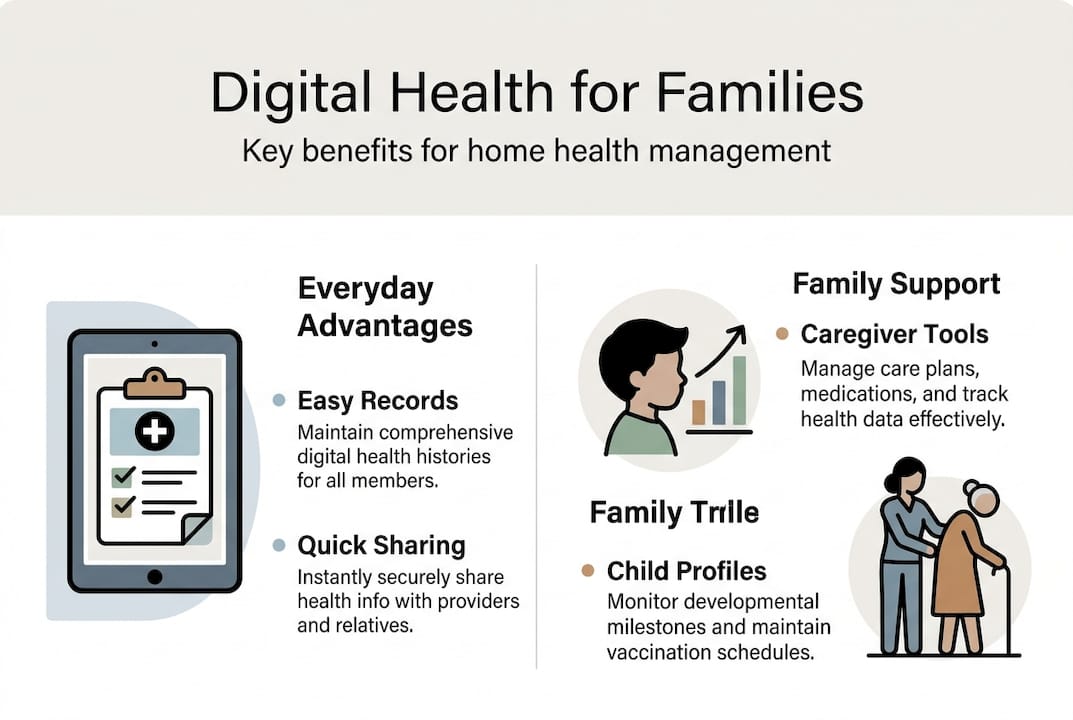
The digital health management benefits for families go beyond individual convenience. When everyone’s records are in one place, coordinating care across providers becomes far less stressful.
Adoption trends at a glance:
| Year | Portal adoption rate | Key driver |
|---|---|---|
| 2020 | 40% | COVID-19 telehealth push |
| 2022 | 57% | Expanded portal features |
| 2024 | 65% | Mobile access and family tools |
The portal adoption insights confirm a clear trend: people who use digital tools report higher satisfaction and feel more in control of their care.
Pro Tip: Start by uploading your most recent lab results and medication list. That single step makes your next doctor’s visit significantly more productive. You can explore more on the MedFiles.ai blog for practical tips on getting organized fast.
Understanding why preserving medical history matters is also key. Gaps in your health record can lead to repeated tests, delayed diagnoses, and higher costs over time.
How digital communication transforms patient-provider engagement
Beyond record access, digital health radically improves provider communication.
Think about the last time you called your doctor’s office. You probably waited on hold, left a message, and waited again for a callback. Secure messaging through a patient portal cuts that cycle entirely. 79% of portal users message their providers directly, and secure messaging reduces phone volume while improving response times for both patients and staff.
Here is how the shift plays out in practice:
- Send a message. Ask about a test result, request a prescription refill, or flag a new symptom.
- Get a documented response. Your provider replies in writing, creating a clear record of the exchange.
- Follow up easily. Reference past messages without re-explaining your situation every time.
- Share records instantly. Attach relevant documents directly to your message for faster, more accurate care.
- Reduce missed communication. Written threads mean nothing gets lost in a phone handoff.
The difference between old and new communication methods is significant:
| Method | Speed | Documentation | Accessibility |
|---|---|---|---|
| Phone call | Slow, hold times | None | Limited hours |
| Secure message | Fast, async | Full written record | 24/7 |
| In-person visit | Immediate | Notes only | Scheduled only |
“Secure messaging gives patients a direct, documented line to their care team. That transparency builds trust and improves outcomes for everyone involved.”
Research on digital communication challenges also shows that while messaging improves most interactions, providers need proper workflows to manage volume effectively. That is why choosing a platform built for clinical communication matters. MedFiles.ai’s tools for doctors and patients are designed with exactly that balance in mind.
Family health management: Supporting caregivers, children, and relatives
The benefits are not just for individuals. Digital health solutions are powerful for families too.
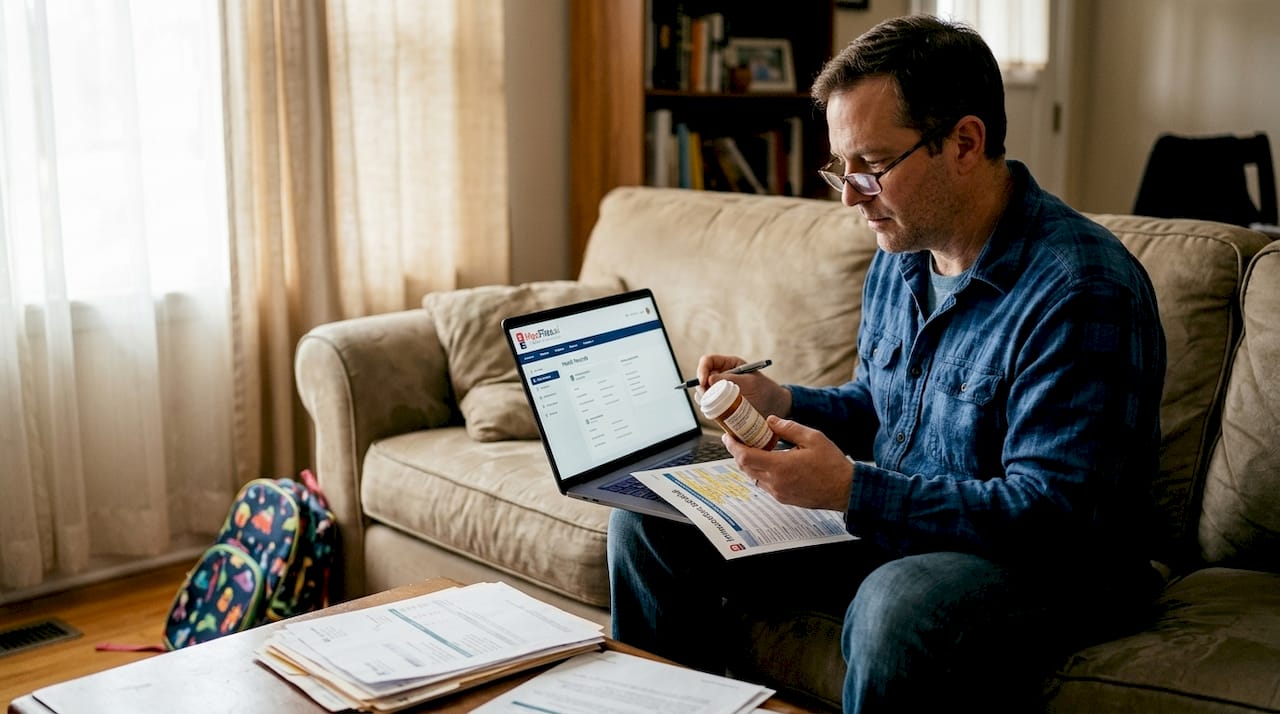
Parents, adult children caring for aging relatives, and family caregivers face a unique challenge: managing multiple people’s health information at once. Digital tools make that manageable. Caregiver proxy access doubled to 51% since 2020, and 53% of parents now use apps to track their child’s health information.
Here is what digital family health management looks like in real life:
- Pediatric tracking. Parents can view immunization records, growth charts, and visit summaries for each child in one place.
- Elderly care coordination. Adult children can monitor a parent’s medications, appointments, and test results remotely.
- Proxy access. Authorized family members can view and manage records on behalf of someone who needs support.
- Shared decision-making. When a family member faces a diagnosis, having complete records helps everyone ask better questions together.
- Remote confirmation. Check that a relative took their medication or attended their appointment without making a phone call.
Research on family decision-making tools confirms that shared access to health data improves coordination and reduces caregiver stress significantly.
Pro Tip: Set up separate profiles for each family member, including children and elderly relatives. Keeping records distinct prevents confusion and makes sharing with specific providers much cleaner. The digital health for caregiving resources at MedFiles.ai walk you through exactly how to do this.
For a step-by-step approach, the family workflow guide covers how to structure your family’s records so nothing falls through the cracks.
Privacy, security, and digital divide: Addressing common concerns
No digital solution is perfect. So what about security and access for everyone?
Security is the first question most families ask, and it is a fair one. Certified platforms use encryption and access controls including TLS and AES-256 standards, along with role-based access management. The HIPAA Security Rule requires these protections for any platform handling health data. That means your information is protected both in transit and at rest.
Here is what strong security looks like in practice:
- End-to-end encryption. Data is scrambled during transfer and storage so only authorized users can read it.
- Role-based access. You control exactly who sees which records, whether that is a specialist, a caregiver, or a family member.
- Audit logs. Every access event is recorded, so you can see who viewed your records and when.
- Two-factor authentication. An extra layer of identity verification before anyone can log in.
“The AMA health data privacy framework emphasizes that patients deserve clear, enforceable rights over who accesses their health data and how it is used.”
But real risks do exist. Shared family devices, consumer apps without HIPAA compliance, and low digital literacy all create vulnerabilities. Research on privacy disparities and the digital divide shows that underserved populations face higher exposure to these gaps.
To protect your family:
- Always use a private, password-protected device for health apps.
- Check that any app you use is HIPAA-compliant before uploading sensitive records.
- Enable two-factor authentication on every health account.
- Review the platform’s privacy policy before signing up.
For a full breakdown of what to look for, the secure medical document storage guide covers every key feature. You can also review compliance and pricing options to find a plan that fits your security needs. MedFiles.ai’s patient privacy solutions are built to meet HIPAA standards from the ground up.
A deeper look: What most articles miss about digital health adoption
Understanding privacy and access is only half the story. Here is our candid take on what is missing in most discussions.
Most guides focus on features and statistics. They rarely talk about what actually stops people from using digital health tools long-term. The truth is, signing up is easy. Staying engaged is harder.
Adoption is rising, but drop-off, literacy barriers, and relational loss still affect a significant portion of users. Many people create an account, upload a few documents, and then stop. Why? Because the tool did not come with enough support to make it a habit.
The families who benefit most from digital health are not necessarily the most tech-savvy. They are the ones who had someone walk them through the setup, explain what each feature does, and check in when something felt confusing. Technology without education is just a login screen.
Our view: digital health only delivers its real promise when users are equipped, not just enrolled. That means choosing platforms that offer clear guidance, responsive support, and privacy controls you actually understand. Explore the additional digital health benefits that come with being a genuinely supported user, not just a subscriber.
Take the next step with secure, easy-to-use digital health
Ready to experience the benefits? Here is how to get started with a modern, trusted solution.
MedFiles.ai gives you everything covered in this article, organized, secure, and built for real families. Store records for every family member, share securely with any provider, and access everything instantly from any device.
Explore secure solutions for patients to see how MedFiles.ai handles your privacy and keeps your records organized. Compare storage, sharing, and family features across tiers when you see plans and pricing. Your health information deserves a secure home. Start building it today.
Frequently asked questions
Are digital health solutions secure for storing my family’s sensitive data?
Yes, certified platforms follow strict HIPAA security standards, including encryption in transit and at rest and role-based access controls, to safeguard your health data at every step.
How do digital health portals improve communication with providers?
Secure messaging and easy record sharing help you get faster, more direct responses from your healthcare team. 79% of portal users already message their providers this way, cutting phone volume and improving response times.
What happens if someone in my family is not good with technology?
Most platforms offer caregiver proxy features so a trusted family member can manage records on someone else’s behalf. Proxy access has doubled to 51% since 2020, showing how widely this feature is now used.
Are there any risks when using non-official healthcare apps?
Yes. Consumer apps without HIPAA compliance can expose sensitive data through privacy gaps in non-certified apps. Always choose established, certified platforms for managing your family’s medical information.
Recommended
- 5 digital health management benefits for your family | MedFiles.ai
- MedFiles.ai - Your Digital Medical History
- How to master digital medical records workflow for families | MedFiles.ai
- Why preserving medical history empowers your health: 5 key benefits | MedFiles.ai
- 3 Benefits of Choosing Family Medicine for Your Health Care - What to Know | Garden State Medical Group | Garden State Medical Group