Why Track Family Health History: Your 2026 Guide
Discover why track family health history is crucial for personalized healthcare. Learn how to gather this vital information for your family's well-being!
Why Track Family Health History: Your 2026 Guide
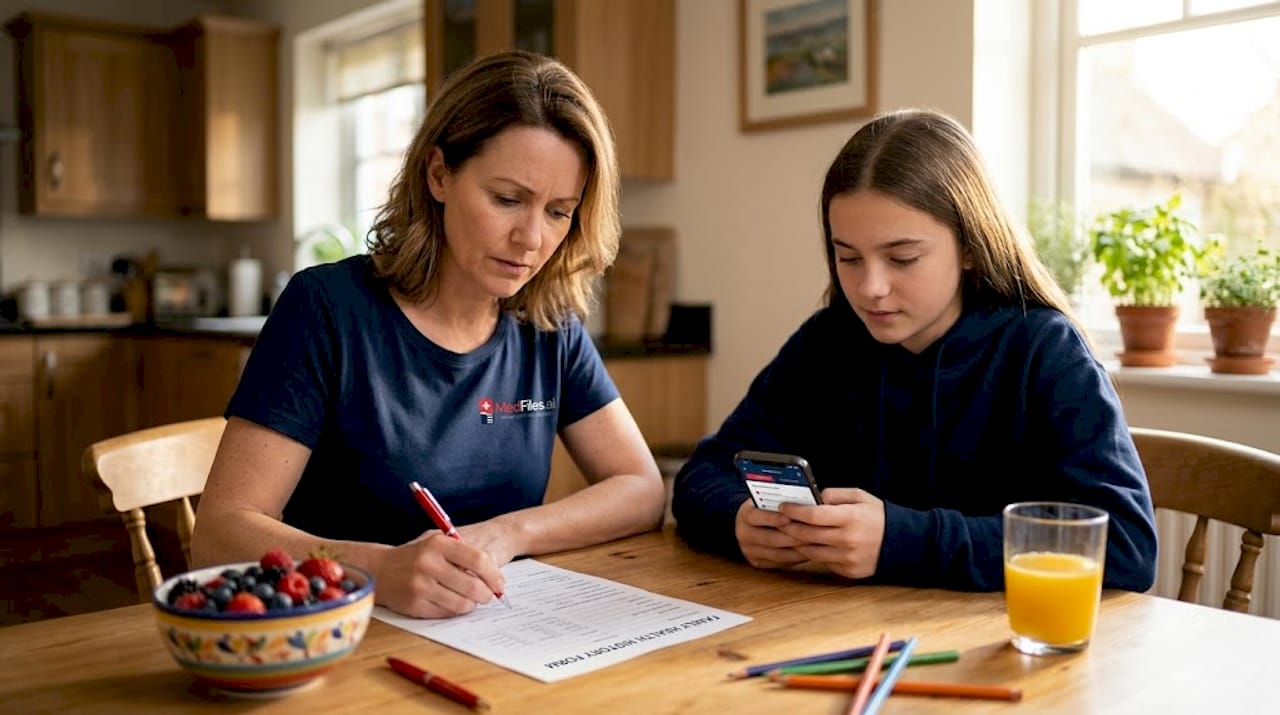
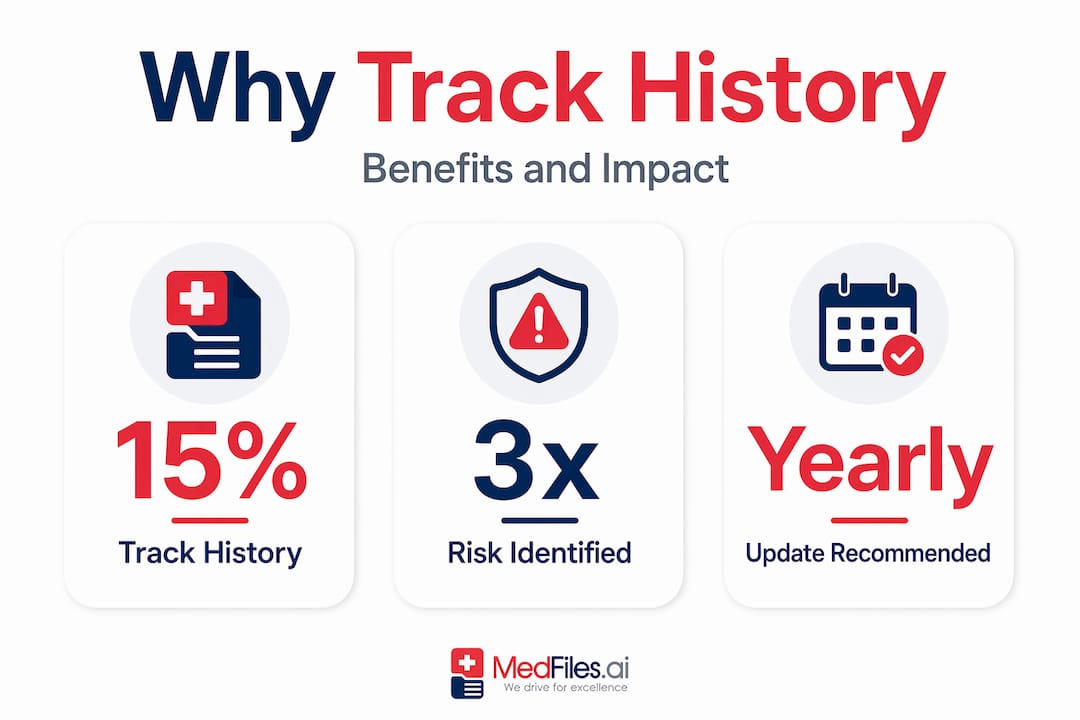
Most people know they should collect their family health history. Very few actually do it. Only 15% of adults have actively gathered this information, despite 95% agreeing it matters. That gap is not about laziness. It is about not knowing where to start, what to ask, or what to do with the answers. Understanding why track family health history goes well beyond filling out a form at the doctor’s office. It is one of the most direct ways to personalize your healthcare, catch risks early, and give your children a head start on their own health.
Table of Contents
- Key takeaways
- Why family health history matters more than you think
- How family history changes your medical care
- How to start tracking your family health records
- Family history is not your destiny
- My take on why most people wait too long
- Start building your family health record with Medfiles
- FAQ
Key takeaways
| Point | Details |
|---|---|
| Awareness alone is not enough | Only 15% of adults collect family health history, creating a preventable blind spot in personal care. |
| Three generations is the target | Covering parents, siblings, grandparents, aunts, and uncles gives the clearest picture of your inherited risks. |
| Incomplete history still has value | Even partial family health information helps doctors build a more accurate risk profile for you. |
| History informs screening timelines | Doctors use your family data to recommend earlier or more frequent screenings for cancer, heart disease, and more. |
| Regular updates keep it useful | Schedule an annual review of your family health record, ideally tied to your yearly wellness exam. |
Why family health history matters more than you think
Family health history is not just a list of who had what disease. It is a record of your genetic blueprint combined with the lifestyle and environment your family shared. When your grandfather had a heart attack at 52 and your uncle was diagnosed with type 2 diabetes at 45, those facts tell your doctor something your bloodwork alone cannot.
A complete family health history should cover at least three generations on both sides of the family. That means parents, siblings, grandparents, aunts, uncles, and even first cousins when possible. For each person, the most useful details include:
- Diagnosed conditions, especially chronic or serious ones like heart disease, cancer, stroke, or diabetes
- Age at diagnosis, because early onset often signals stronger genetic influence
- Cause of death and age at death for deceased relatives
- Ethnic background, since some conditions are more common in specific populations
- Pregnancy complications or reproductive health issues
The combination of genetic predisposition and shared lifestyle factors like diet, activity levels, and smoking history creates a fuller picture of real risk. Two families might share the same gene variant for hypertension, but the one that also shares a high-sodium diet and low activity pattern carries a compounded risk.
One critical point that stops many people from starting: you do not need a perfect record to benefit. Partial family health data still enables better risk profiling than having no information at all. If you know your mother had breast cancer but do not know your grandmother’s history, that partial information is still medically significant. Start with what you have.
How family history changes your medical care
This is where the importance of family health tracking becomes concrete. When you share a documented family history with your doctor, it directly changes the decisions they make about your care.
Here is a step-by-step look at how that plays out:
- Risk stratification. Your doctor classifies your risk level for specific conditions based on who in your family had them, how many relatives were affected, and how early they were diagnosed.
- Adjusted screening timelines. Doctors may recommend earlier mammograms or colonoscopies based on your family profile. The standard age for a colonoscopy is 45, but someone with a parent diagnosed with colorectal cancer at 50 might start screening at 40.
- Targeted testing. A family history of BRCA-related breast cancer may prompt genetic counseling and specific blood tests you would not otherwise receive.
- Medication and treatment choices. Some medications carry higher risks for people with certain genetic backgrounds. Knowing your family’s cardiovascular history, for example, can influence statin prescribing decisions.
- Lifestyle recommendations. If heart disease runs in your family, your doctor can give you precise, motivated guidance on diet, exercise, and blood pressure monitoring rather than generic advice.
The role of family health tracking is not passive. It actively shifts your care from reactive to preventive. Instead of finding out you have advanced hypertension at 55, you and your doctor are watching your numbers closely at 35 because you both know the pattern in your family.
Pro Tip: Bring your family health history to every new provider you see, including specialists. Many doctors only see the snapshot in front of them. You are the one who carries the full picture.
Lifestyle changes informed by family patterns can also reduce your actual risk. Knowing your family history of type 2 diabetes is one of the strongest motivators for making sustainable dietary changes. The data gives the motivation a face.
How to start tracking your family health records
Starting feels harder than it is. Most people imagine an awkward Thanksgiving conversation that goes sideways. But collecting family health information can be a gradual, respectful process. Here is how to approach it step by step.

Start with yourself and your immediate family. Write down every diagnosis, surgery, chronic condition, and significant medication you and your parents and siblings have had. This alone gives you a strong foundation.
Have gentle, forward-looking conversations. Framing discussions as proactive rather than morbid makes a real difference in how family members respond. Saying “I want to make sure our kids have this information” lands differently than asking someone to revisit painful medical memories.
Use documents to fill gaps. Death certificates and obituaries are underused but reliable sources for confirming causes of death and ages at diagnosis for relatives who have passed. Hospital records, old prescription bottles, and insurance paperwork can also fill in important blanks.
Useful tools and strategies for this process include:
- The U.S. Surgeon General’s My Family Health Portrait tool, a free online resource for organizing multi-generational data
- Digital platforms like Medfiles, which let you store and organize records securely across multiple family profiles
- Paper-based templates from your doctor’s office or state health department
- Sharing organized medical records with family members so everyone works from the same source of truth
One area many people overlook is mental health. Including family mental health history in your record helps providers understand patterns of depression, anxiety, or substance use that have a real genetic component.
Finally, treat your family health record as a living document. Schedule annual updates, ideally tied to your yearly wellness visit, and add new diagnoses or deaths as they occur. Outdated information can be as misleading as no information at all.
Pro Tip: Ask older relatives to share their health history during casual family gatherings rather than formal sit-down conversations. People open up more when they are relaxed and not put on the spot.
Family history is not your destiny
This is the myth that quietly stops people from engaging with their family health history. They assume that if heart disease killed their father and grandfather, it will get them too. So why bother tracking it?
That thinking gets the cause-and-effect backward. Family history is a warning signal, not a verdict. Knowing about a pattern gives you the opportunity to interrupt it.
Genetics accounts for only part of the story. The rest comes from choices: what you eat, how much you move, whether you smoke, how you manage stress. Two siblings with identical genetic profiles can have dramatically different health outcomes depending on their behaviors. The one who tracks, monitors, and acts on that family information has a clear advantage.
“Your family health history tells you where to pay attention, not what to accept.”
This mindset shift is significant. Learning that your family has a strong history of colon cancer does not mean you will develop it. It means you need a colonoscopy earlier, you watch your fiber intake, and you report any unusual symptoms promptly. That awareness saves lives.
There is also the anxiety factor to address honestly. Some people avoid collecting family health information because they are afraid of what they will find. That fear is understandable. But knowing your genetic risks allows you to take targeted, specific actions rather than feeling broadly worried about everything. Specific information reduces anxiety. Vague fear increases it.
Learning about family health benefits does not require genetic testing or a family medical conference. It starts with a conversation and a simple document.
My take on why most people wait too long
I have seen a consistent pattern in how people approach family health history. They intend to gather it. They think about it after a relative gets a serious diagnosis. Then life moves on, the intention fades, and two years later nothing has been recorded.
The real problem is not motivation. It is the absence of a system. When there is no clear place to store what you collect, no prompt to update it, and no easy way to share it with a doctor, the task stays on the mental to-do list indefinitely.
What I have found actually works is starting small and treating it as an ongoing practice rather than a one-time project. Record one person’s history today. Add another relative next month. Link your annual physical to an update of the document. Over time, you build something genuinely useful without the overwhelm of doing it all at once.
A living, updated family health record is one of the most underrated health assets a family can have. It costs nothing but time, and it can change the quality of care every member of your family receives for decades. The families who have it already know how much it matters. The rest find out the hard way.
— Team
Start building your family health record with Medfiles
If you are ready to put this into practice, Medfiles makes it straightforward. The platform is built for exactly this: storing, organizing, and sharing your family’s medical information securely in one place.
With Medfiles, you can create separate profiles for every family member, upload existing medical documents, and organize everything from diagnoses to test results automatically. The platform uses HIPAA-ready infrastructure with end-to-end encryption, so your most sensitive health information stays private. You can also share records directly with your doctors through the Medfiles platform, giving your providers instant access to the complete family history they need to make better decisions for you.
You do not need a perfect history to get started. Upload what you have, add to it over time, and let the system keep it organized. Your family’s health record. Secure, accessible, and always ready when you need it. See what plan fits your family and get started today.
FAQ
What does family health history include?
Family health history includes diagnosed conditions, ages at diagnosis, causes of death, ethnic background, and shared lifestyle factors for at least three generations of relatives on both sides of the family.
Why track family health history if it cannot change my genetics?
Your genes do not determine your outcome. Tracking family health history helps you identify risks early, adjust screening schedules, and make lifestyle changes that can significantly reduce the impact of inherited conditions.
How many generations should I collect health history for?
Experts recommend covering at least three generations, including parents, siblings, grandparents, aunts, and uncles, for the most accurate risk assessment.
What if I do not know my full family history?
Partial family health information is still valuable. Even limited data helps doctors build a better risk profile for you than having no information at all. Use death certificates, obituaries, and old records to fill gaps where possible.
How often should I update my family health history?
Update your family health record at least once a year, ideally during your annual wellness visit, and add new diagnoses or deaths as they happen to keep the information accurate and useful.