How to Prepare for Medical Emergencies: A Family Guide
Learn how to prepare for medical emergencies with our family guide. Discover essential supplies, documents, and skills for a quick response.
How to Prepare for Medical Emergencies: A Family Guide
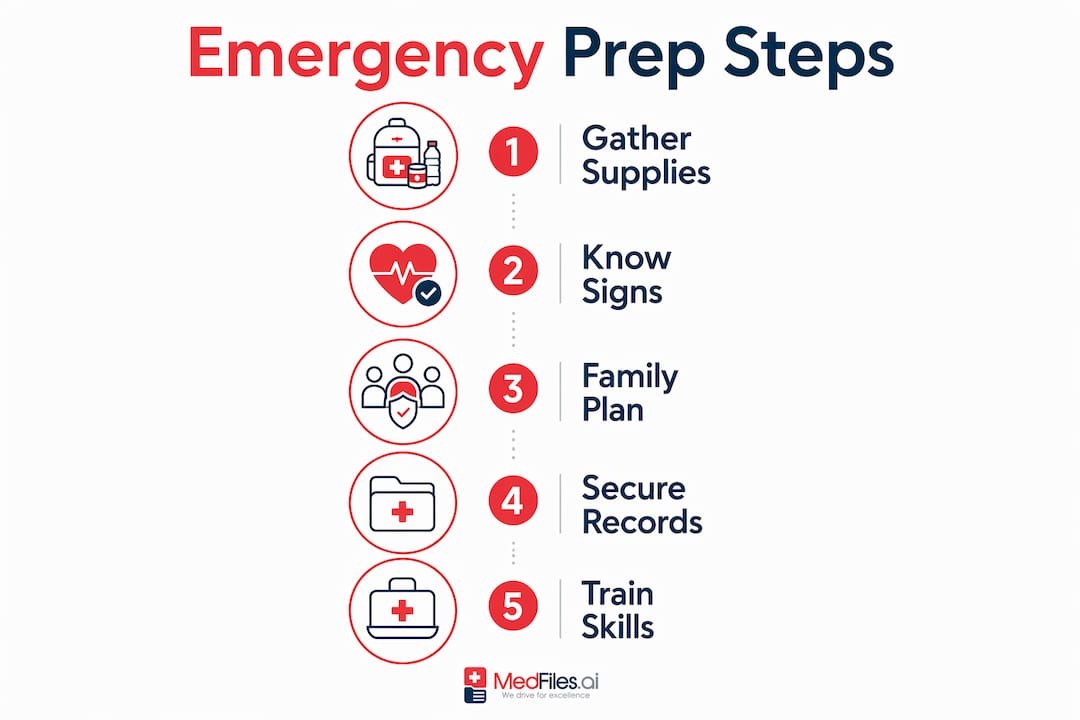
Knowing how to prepare for medical emergencies can be the difference between a controlled response and a crisis. The core steps: maintain an adequate medication supply and a multi-day survival kit, keep critical documents accessible both physically and digitally, train in CPR and first aid, share your emergency plan with every household member, and store your medical records securely on a platform like Medfiles.
- Supplies: A portable, waterproof kit with medications, first aid basics, and personal care items
- Documents: ID, allergy lists, medication records, provider contacts, and advance directives
- Skills: CPR, the Heimlich maneuver, AED use, and knowing when to call 911
- Communication: Every family member knows the plan, the document locations, and their role
- Digital records: Encrypted, HIPAA-compliant storage that travels with you anywhere
Table of Contents
- 1. What supplies and documents should you have ready?
- 2. How do you recognize an emergency and respond effectively?
- 3. How should your family communicate and plan together?
- 4. Why secure digital medical records strengthen your readiness
- Store your family’s records securely with Medfiles
- Key Takeaways
1. What supplies and documents should you have ready?
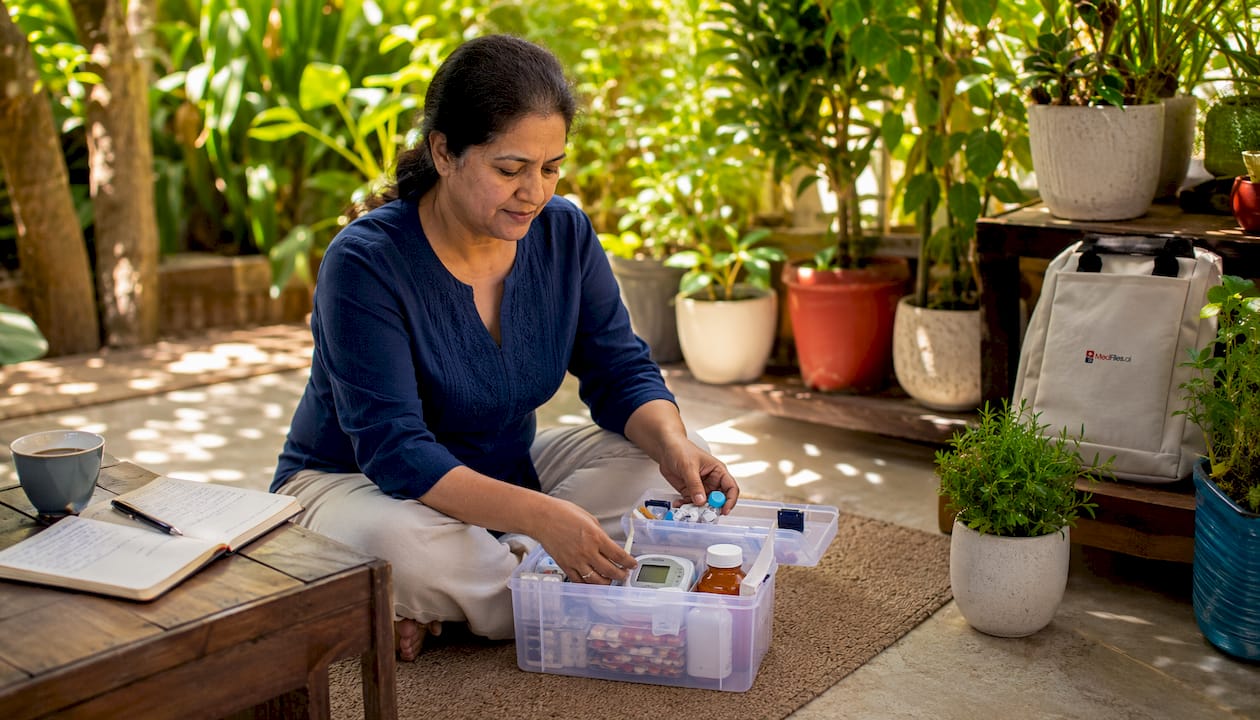
Physical readiness starts with two things: the right supplies and the right paperwork. Maintain a minimum 30-day supply of essential prescription medications and a 72-hour survival kit packed in a portable, waterproof container.
Your survival kit should include:
- Prescription medications (30-day supply minimum) plus over-the-counter basics like pain relievers and antihistamines
- Bandages, gauze, antiseptic wipes, medical tape, and disposable gloves
- A thermometer, blood pressure cuff if applicable, and any personal medical devices
- Three days of water and non-perishable food per person
- Flashlight, batteries, and a manual can opener
Documents matter just as much as supplies. Six categories of medical information are considered critical for emergency access: personal ID, allergy lists, medication lists, medical equipment details, healthcare provider contacts, and emergency phone numbers. Store physical copies in a labeled, waterproof folder inside your kit. Keep a family health document checklist updated and review everything at least twice a year.
Pro Tip: Make a laminated wallet card listing your top three allergies, current medications, and one emergency contact. First responders check pockets and wallets before they check phones.
2. How do you recognize an emergency and respond effectively?
Recognizing a life-threatening situation quickly is a skill. Training in CPR and first aid directly improves outcomes, and knowing the warning signs of the most common emergencies gives you a critical head start.
Watch for these red flags requiring an immediate 911 call:
- Chest pain, pressure, or tightness (possible cardiac event)
- Sudden facial drooping, arm weakness, or slurred speech (stroke)
- Severe allergic reaction: hives, throat swelling, difficulty breathing
- Uncontrolled bleeding or loss of consciousness
- Choking with inability to speak or cough
When someone is unresponsive, use the ABCDE method: Airway, Breathing, Circulation, Disability, Exposure. Open the airway first, check for breathing, begin chest compressions if there is no pulse, then assess for altered consciousness and any harmful exposure. If an Automated External Defibrillator (AED) is nearby, use it without delaying compressions.
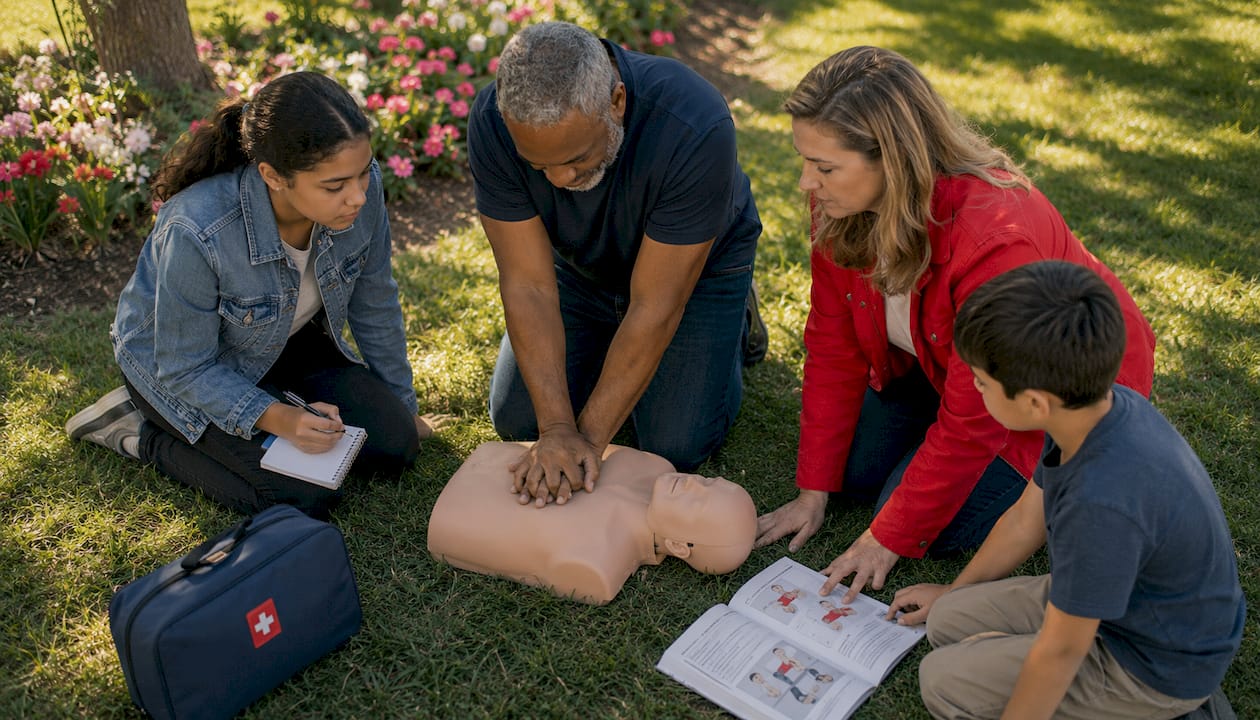
CPR courses are available through the American Red Cross and many local community organizations. Practicing on a mannequin once is worth more than reading about it ten times. The same applies to EpiPen use: if anyone in your household has a severe allergy, every adult should know how to administer it.
3. How should your family communicate and plan together?
A plan that only one person knows is not a plan. Discussing emergency plans and document locations in advance reduces family stress and speeds up crisis response when every second counts.
Start with a family meeting. Cover:
- Where the physical emergency kit and documents are stored
- Who calls 911, who stays with the patient, and who contacts other family members
- Medical conditions, allergies, and current medications for each household member
- Advance Directives and personal care wishes for adults
- The location of the nearest emergency room and urgent care center
Special populations need tailored plans. Infants require formula, diapers, and pediatric medications in the kit. Elderly family members may need mobility aids, extra prescription supplies, or written instructions for caregivers. People with disabilities may need evacuation assistance or specialized equipment listed explicitly in the plan.
Mental health belongs in this conversation too. Emergencies trigger fear and confusion. Designating clear roles reduces that burden. Teach children a simple version of the plan: call 911, stay calm, and find a trusted adult. After any emergency, check in with everyone emotionally, not just physically.
4. Why secure digital medical records strengthen your readiness
Physical kits can be lost, damaged, or left behind. A secure digital record travels with you on any device, anywhere. Platforms like Medfiles provide HIPAA-compliant, end-to-end encrypted storage with automatic document organization, AI-powered analysis, and controlled sharing with providers and family members.
Here is what digital storage adds to your preparedness:
- Instant access: Pull up a complete medication list or recent EKG from your phone in seconds, even at an out-of-network ER
- Multi-profile management: Store records for every family member, including pets, under one account
- Secure sharing: Send documents directly to a new provider or specialist without faxing or reprinting
- Organized history: Test results, prescriptions, imaging reports, and surgical notes all in one place, automatically sorted
Emergency responders often struggle to access patient history when it matters most. A physical grab-and-go folder with your EKG, medication list, and advance directives is still valuable. But pairing it with an encrypted digital record means a backup always exists. Medfiles supports secure document sharing with any provider you choose, giving you control over who sees what and when.
Families with pets should also digitize rabies vaccination records and veterinary contacts. Many emergency shelters require proof of vaccination before allowing animals inside.
Pro Tip: Link your physical emergency wallet card to your Medfiles digital emergency ID using a QR code. First responders can scan it to access your full record instantly, even if your phone is locked or damaged.
Store your family’s records securely with Medfiles

Medfiles makes it simple to store, organize, and share your family’s complete medical history in one encrypted, HIPAA-ready platform. Upload documents, manage multiple profiles, and share records with any provider in seconds. Your records are there when you need them most.
Start organizing your medical records today and build the digital layer your emergency plan is missing.
Key Takeaways
Effective medical emergency preparedness combines physical supplies, critical documents, response training, clear family communication, and secure digital record storage.
| Point | Details |
|---|---|
| 30-day medication supply | Keep at least a 30-day prescription supply and a 72-hour survival kit in a waterproof container. |
| Six critical document types | Store personal ID, allergy lists, medication records, equipment details, provider contacts, and emergency numbers. |
| ABCDE first aid method | Use Airway, Breathing, Circulation, Disability, Exposure to assess any unresponsive person before help arrives. |
| Family plan communication | Every household member should know document locations, emergency roles, and the nearest ER before a crisis occurs. |
| Digital plus physical backup | Pair a grab-and-go folder with encrypted digital storage like Medfiles for dual-layer access during any emergency. |