Immunization Schedule 2026: What Parents and Providers Need
Discover the 2026 immunization schedule updates, including RSV and COVID-19 changes. Ensure your child's vaccinations are up to date.
Immunization Schedule 2026: What Parents and Providers Need
The official 2026 child and adolescent immunization schedule from the CDC and ACIP, mirrored by the American Academy of Pediatrics (AAP), organizes recommended vaccines into three tables: Table 1 (age-based schedule), Table 2 (catch-up schedule), and Table 3 (medical indications). This year’s headline changes involve RSV protection, updated COVID-19 dosing, and refined influenza guidance.
Before your next well-child visit, here’s what to do first:
- Download the official Table 1 PDF from CDC and check your child’s age row.
- Pull your child’s existing immunization record, paper or digital, before the appointment.
- Ask your pediatrician whether they follow the CDC/ACIP schedule or the AAP version, since small timing differences exist.
The bottom line: three vaccine-related updates define 2026 for most families. Maternal RSV vaccination timing shifted for pregnant patients during a seasonal window suggested by the schedule, infant RSV monoclonal antibody options updated to include newer products, and COVID-19 dosing guidance was updated according to product and age group. None of this changes the core rule that has guided pediatric immunization for decades: a delayed dose almost never means starting a series over.
Key Takeaways
Following the official 2026 immunization schedule requires using Table 1 for routine timing, Table 2 for catch-up intervals, and Table 3 for medical exceptions, without restarting completed doses.
| Point | Details |
|---|---|
| Three tables, one schedule | Table 1 covers routine timing, Table 2 covers catch-up intervals, Table 3 covers medical exceptions. |
| Never restart a series | Missed doses require the correct minimum interval from Table 2, not a fresh start. |
| RSV protection expanded in 2026 | Maternal Abrysvo timing (weeks 32 to 36) pairs with infant options like nirsevimab and clesrovimab. |
| AAP and CDC can differ slightly | Ask your pediatrician which “ideal timeline” they follow and document that choice. |
| Centralize your records | Tools like Medfiles help families track doses and share history instantly with new providers. |
Table of Contents
- How to Read the 2026 Immunization Schedule Tables
- What Changed in the 2026 Vaccine Schedule?
- Why Do AAP and CDC Schedules Sometimes Differ?
- What if My Child Missed a Vaccine Dose?
- Special Medical Situations That Change the Schedule
- Why the Immunization Schedule Looks the Way It Does
- Contraindications and Precautions Parents Should Know
- Talking to Hesitant Parents About Vaccine Timing
- Keeping Immunization Records Straight
- Tracking Due Dates Without Relying on Memory
- Why This All Comes Down to Good Habits, Not Just Good Information
- Frequently Asked Questions
- Sources
How to Read the 2026 Immunization Schedule Tables
Table 1, Table 2, and Table 3 aren’t three separate schedules. They’re three views of the same underlying recommendations, and each answers a different question.
Table 1 is the one most parents picture when they hear “immunization schedule.” It runs age groups across the top, from birth through 18 years, and vaccines down the side. The colored bars tell the real story: a solid color usually marks the recommended age range for a routine dose, a different shade flags a catch-up window, and a third marks vaccines requiring shared clinical decision making between family and provider, meaning the choice depends on individual risk factors rather than a blanket recommendation.
Table 2 exists for exactly one purpose: figuring out what to do when a child falls behind. It lists minimum intervals between doses for each vaccine series, by age at first dose. This is where the “don’t restart” principle lives in black and white. If a child missed a hepatitis B dose earlier, Table 2 tells the clinician the shortest safe gap before the next one, not a reset to dose one.
Table 3 covers the exceptions. Kids with chronic kidney disease, HIV, sickle cell disease, or asplenia often need a different vaccine schedule than a healthy peer. Table 3 organizes those variations by medical condition so a clinician can find the relevant row fast during a visit, rather than paging through footnotes.
- Find your child’s age or condition category first.
- Cross-reference Table 1 for routine timing, or Table 2 if a dose was missed.
- Check Table 3 only if a diagnosed medical condition applies.
Pro Tip: Ask your pediatric office for the laminated wall-chart version many state health departments print, like Washington’s DOH adaptation of the national schedule. It’s faster to scan during a rushed appointment than the full multi-page PDF.
What Changed in the 2026 Vaccine Schedule?
RSV protection looks different this year for a growing share of infants. The 2026 schedule reflects maternal Abrysvo vaccination administered between 32 and 36 weeks of pregnancy during RSV season, paired with infant RSV monoclonal antibody options, nirsevimab (Beyfortus) or the newer clesrovimab, for babies whose mothers weren’t vaccinated or who need added protection.
Key updates to know:
- RSV maternal vaccine: Abrysvo timing window narrowed to weeks 32 through 36 for seasonal alignment.
- Infant RSV monoclonal antibodies: nirsevimab and clesrovimab are options depending on birth timing and maternal vaccination status.
- COVID-19 dosing: minimum ages and dose counts vary by product (Pfizer, Moderna, Novavax), so check the specific formulation your clinic stocks.
- Influenza: seasonal strain updates continue annually, with no structural change to dosing age.
Because federal guidance sometimes shifts after the main schedule prints, clinicians should also check HHS’s childhood immunization resources for addenda issued after initial publication.
Why Do AAP and CDC Schedules Sometimes Differ?
Short answer: they’re written by different bodies with different mandates. The CDC/ACIP schedule reflects federal public health recommendations. The AAP publishes its own version, which it explicitly frames as an “ideal timeline” for healthy children, built from pediatrician clinical experience layered on top of the federal baseline.
Most pediatricians default to the AAP version in daily practice, even while CDC’s schedule remains the official government reference.
What this means for your family:
- Ask your pediatrician directly which schedule they follow, and why, at your next visit.
- Differences usually show up as slight timing preferences, not disagreements over whether a vaccine is needed.
- Document which version your provider uses so a new doctor, urgent care, or school nurse can pick up the same plan without confusion.
What if My Child Missed a Vaccine Dose?
A missed dose is a scheduling problem, not a medical setback that erases previous doses. The core catch-up principle is unambiguous: series generally do not restart regardless of how much time has passed since the last dose.
Here’s how to plan a catch-up visit without guesswork:
- Confirm the last dose date from your child’s immunization record, not memory.
- Locate the vaccine row in Table 2, which lists the minimum interval before the next dose is due based on age and prior dose timing.
- Check for contraindications specific to the missed vaccine, since a child’s current health status can affect timing.
- Ask the clinic to update the official record immediately after the visit, before you leave the building.
- Set a reminder for the next dose in the series so the gap doesn’t repeat.
Minimum intervals vary by vaccine. Some series allow a shorter gap between catch-up doses than the routine schedule calls for; others hold firm regardless of how far behind a child has fallen. Table 2 is the only place to confirm the exact interval for a specific vaccine and age, so treat it as the final word rather than estimating.
Pro Tip: Bring last year’s immunization printout to every visit, even routine ones. Clinics change electronic systems more often than you’d think, and a paper or digital backup prevents a dose from being duplicated or missed during a records transfer.
Special Medical Situations That Change the Schedule
Table 3 exists because “healthy child” isn’t every child’s starting point. Kids who are immunocompromised, living with chronic kidney or liver disease, or who lack a functioning spleen often need altered timing, additional doses, or vaccines a healthy peer wouldn’t receive at all.
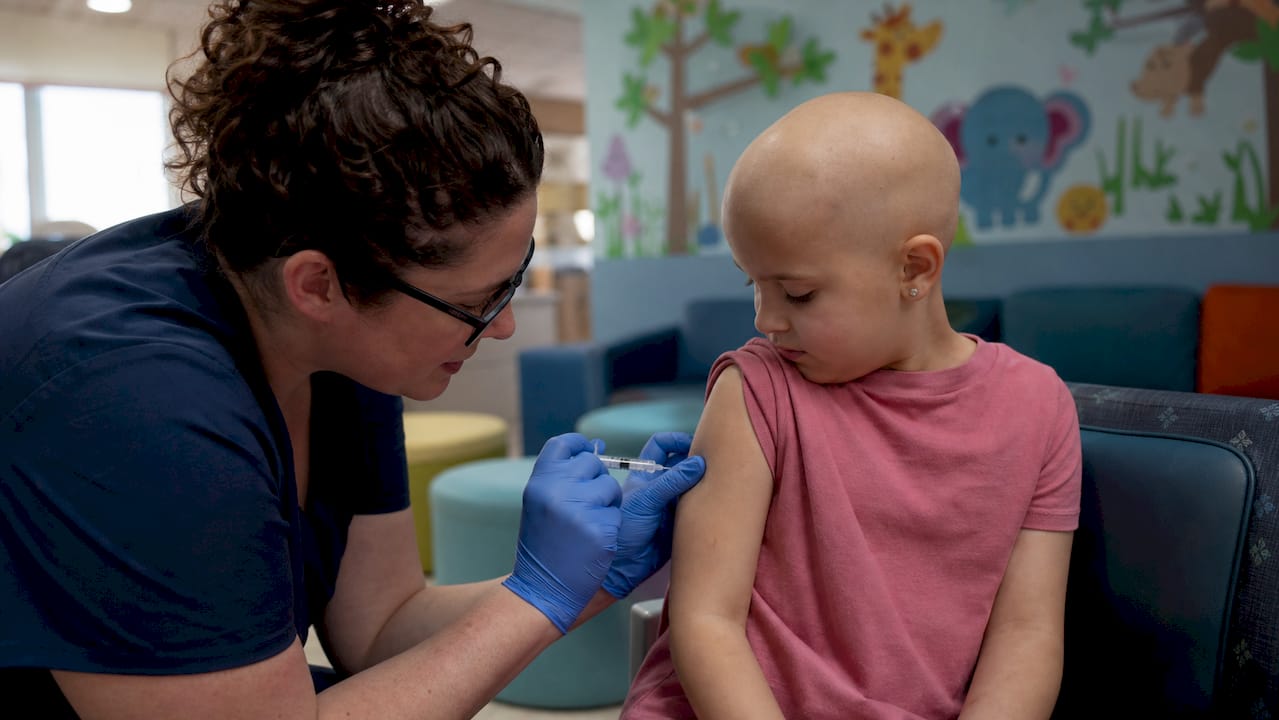
Pregnancy adds its own layer. Maternal RSV vaccination timing, weeks 32 through 36 during typical RSV season, is designed to maximize antibody transfer to the infant during the first months of life, when RSV hospitalization risk peaks. Families in regions with atypical RSV seasonality should follow local health department guidance rather than the standard national window.
Categories flagged in Table 3 include:
- Immunocompromising conditions (including HIV, active cancer treatment, and organ transplant)
- Chronic kidney disease and asplenia
- Pregnancy, specifically for RSV and influenza vaccination
- Egg allergy and other product-specific precautions
For the most current product-level guidance, including dosing specifics for Abrysvo and nirsevimab, check the FDA’s product pages and CDC’s clinical considerations documents directly rather than relying on a general summary.
Why the Immunization Schedule Looks the Way It Does
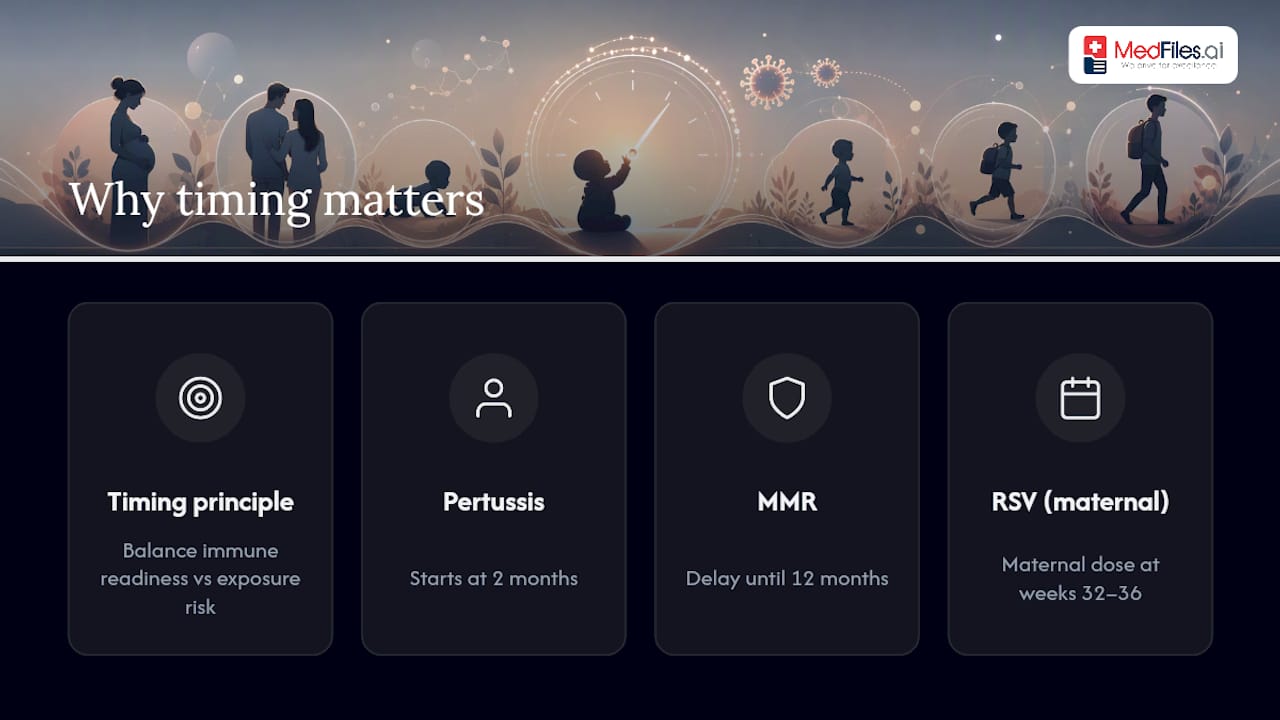
The age windows in Table 1 aren’t arbitrary. Each one reflects a balance between two things: how early a child’s immune system can mount a useful response to a given vaccine, and how early they’re at meaningful risk of exposure to that disease.
Pertussis vaccination starts at 2 months because whooping cough is most dangerous, and most often fatal, in infants too young to be fully vaccinated themselves, which is also why the schedule leans on caregivers and older siblings getting boosted. MMR waits until 12 months in most cases because maternal antibodies still circulating in a younger infant’s blood can blunt the vaccine’s effectiveness.
RSV protection follows a similar logic. Maternal vaccination timed to weeks 32 through 36 of pregnancy allows enough time for antibodies to transfer across the placenta before delivery, covering an infant through the highest-risk early months when their own immune system hasn’t caught up. Timing here isn’t a suggestion. It’s the entire mechanism the vaccine depends on to work.
This is also why the “don’t restart” catch-up principle holds up medically. A delayed second dose doesn’t erase the immune priming from the first. It just means the interval needs to satisfy a minimum spacing requirement, tracked in Table 2, before the next dose can do its job.
Contraindications and Precautions Parents Should Know
Every vaccine on the 2026 schedule carries specific contraindications, situations where the vaccine should not be given, and precautions, situations calling for a judgment call between provider and family.
A severe allergic reaction to a previous dose of a vaccine, or to one of its components, is a true contraindication across nearly every product on the schedule. Moderate to severe acute illness is typically a precaution rather than an outright block. Most clinicians will delay, not skip, a scheduled dose if a child has a fever above a certain threshold, but a mild cold usually doesn’t warrant postponing.
Live vaccines, including MMR and varicella, carry additional precautions for children who are immunocompromised or pregnant adolescents, since the weakened live virus can behave differently in a suppressed immune system. This is exactly the kind of detail Table 3 flags by condition, so a provider isn’t relying on memory during a busy clinic day.
The safest approach: never assume a contraindication applies without confirming it against the current clinical considerations documentation for that specific product. Guidance shifts as new formulations reach the market, and a rule that applied to last year’s flu vaccine formulation may not carry over unchanged.
Talking to Hesitant Parents About Vaccine Timing
Vaccine hesitancy rarely comes from a lack of information. It usually comes from a specific, unanswered worry, about a side effect, a timing choice, or something read online that contradicted what a pediatrician said.
The strategies that tend to work share one trait: they treat the conversation as a dialogue, not a lecture. Leading with a strong, presumptive recommendation, “Today, your child is due for two vaccines,” rather than an open-ended question tends to reduce refusal rates, according to pediatric communication research cited widely in clinical training. Acknowledging a specific concern by name, rather than a generic reassurance, builds more trust than repeating a fact sheet.
Documentation helps here too. A parent who sees a consistent, complete record of what their child has already received, without gaps or duplicate entries, tends to trust the next recommendation more than one working from a patchy paper trail pulled from three different clinics. Confusion about what’s already been given is often mistaken for hesitancy about what’s being offered next.
Keeping Immunization Records Straight
A vaccine given but not recorded is functionally a vaccine that didn’t happen, at least from the standpoint of every future clinician who needs to make a decision based on that history. Good documentation isn’t paperwork for its own sake. It’s what lets Table 2’s catch-up math actually work.
Best practice starts with getting a copy of the official record after every single vaccine visit, not just annually. State immunization information system (IIS) registries capture most doses automatically, but gaps happen when families move states, switch insurance, or see an urgent care provider outside their usual practice. A family health documentation checklist that includes immunization records alongside other essentials keeps the paper trail from fragmenting across providers.
For families juggling multiple children, or multiple providers across a divorce or shared custody arrangement, a centralized approach to sharing health records prevents the single most common documentation failure: two different offices both assuming the other one has the current record.
Tracking Due Dates Without Relying on Memory
Sticky notes and mental math work until they don’t. Most families that fall behind on a vaccine schedule aren’t opposed to vaccination. They simply lost track of when the next dose was due, especially with multiple kids on staggered schedules.
State immunization registries send some automated reminders, but coverage and reliability vary widely by state and by whether a provider consistently reports to the registry. A family health tracking system that flags upcoming due dates independent of any single clinic’s system adds a layer of redundancy that catches gaps before they turn into a missed appointment.
The practical fix is building one habit: after every vaccine visit, update a single source of record, whether that’s a registry printout, a pediatrician’s patient portal, or a digital family health profile, immediately, while the visit details are fresh. Waiting until the next appointment to reconcile records is how doses get duplicated or missed entirely.
Why This All Comes Down to Good Habits, Not Just Good Information
Most vaccine-hesitancy research and most catch-up scheduling failures share a root cause that gets underdiscussed: fragmented records, not fragmented facts. Parents rarely reject a specific vaccine because they misunderstand its purpose. They stall because they’re not sure what’s already been given, whether a dose is overdue, or which schedule their provider is even following.
The AAP versus CDC distinction matters here more than most articles admit. Providers who default to the AAP’s “ideal timeline” without telling families they’ve made that choice create quiet confusion down the line, especially when a family switches pediatricians and the new office defaults to the federal schedule instead. That’s not a failure of either schedule. It’s a failure of documentation and communication working together.
If there’s one underappreciated lever in all of this, it’s the shift toward centralized digital tracking as a standard part of periodic health evaluations, not an afterthought. A clinician who can see a complete, accurate immunization history at a glance spends less time reconstructing what happened and more time on the two things that actually matter: what’s due now, and why.
Store and Share Immunization Records With Medfiles
Medfiles gives your family a private, centralized home for every immunization record, lab result, and clinical note, instead of scattered PDFs across three portals and a folder of paper printouts.

Vaccine visits move faster when your child’s full history is one tap away. Medfiles supports multiple family profiles, so parents managing kids on different schedules, or caregivers tracking an aging parent’s boosters alongside a toddler’s catch-up doses, keep everything organized without juggling separate logins. Every document sits behind HIPAA-ready encryption, and sharing a record with a new pediatrician, a school nurse, or a specialist takes seconds instead of a phone call to your old clinic. That matters for travel, too: an emergency room visit in another state goes faster when you can pull up a complete immunization record instantly rather than trying to remember which office has it.
Start a free trial of Medfiles today, no credit card required, and build your family’s digital immunization profile before your next well-child visit.
Frequently Asked Questions
Is the 2026 immunization schedule different from 2025? Yes, primarily around RSV protection and COVID-19 dosing. Maternal RSV vaccine timing and infant monoclonal antibody options expanded, and COVID-19 minimum ages and dose counts were revised by product.
Do I need to restart a vaccine series if my child missed a dose? No. The established catch-up principle holds that series don’t restart regardless of the gap; Table 2 provides the minimum interval before the next dose.
Should I follow the CDC schedule or the AAP schedule? Ask your pediatrician which one their practice follows. Both are legitimate, evidence-based schedules; the AAP frames its version as an “ideal timeline,” while CDC’s reflects the official federal recommendation.
What is nirsevimab, and does my baby need it? Nirsevimab (Beyfortus) is a monoclonal antibody, not a vaccine, that provides RSV protection to infants whose mothers weren’t vaccinated during pregnancy or who need additional coverage. Clesrovimab is a newer alternative. Your pediatrician determines eligibility based on birth timing and maternal vaccination status.
Where can I get an official printable copy of the schedule? CDC’s vaccine schedules page offers downloadable PDFs, and many state health departments distribute laminated versions for clinic use.
This article is general information, not a substitute for advice from a qualified doctor. Consult a qualified healthcare professional about your own circumstances before acting on anything here.
Sources
- Vaccine Schedules For You and Your Family | CDC
- Healthychildren
- Recommended Child & Adolescent Immunization Schedule 2026 (WA DOH adaptation)