Top 3 Medsi.ai Alternatives for Personal Medical Records 2026
Discover 3 Medsi.ai alternatives for managing personal medical records, helping you choose the right platform for your needs.
Top 3 Medsi.ai Alternatives for Personal Medical Records 2026
Storing and organizing personal and family medical records in one secure place is often messy and incomplete. Many tools restrict sharing or multi-profile management, require manual uploads, or do not publish clear pricing or support details. This side-by-side comparison lets individuals, parents, and caregivers pick the platform that fits their document sources, access needs, and sharing preferences.
Table of Contents
MedFiles.ai
At a Glance
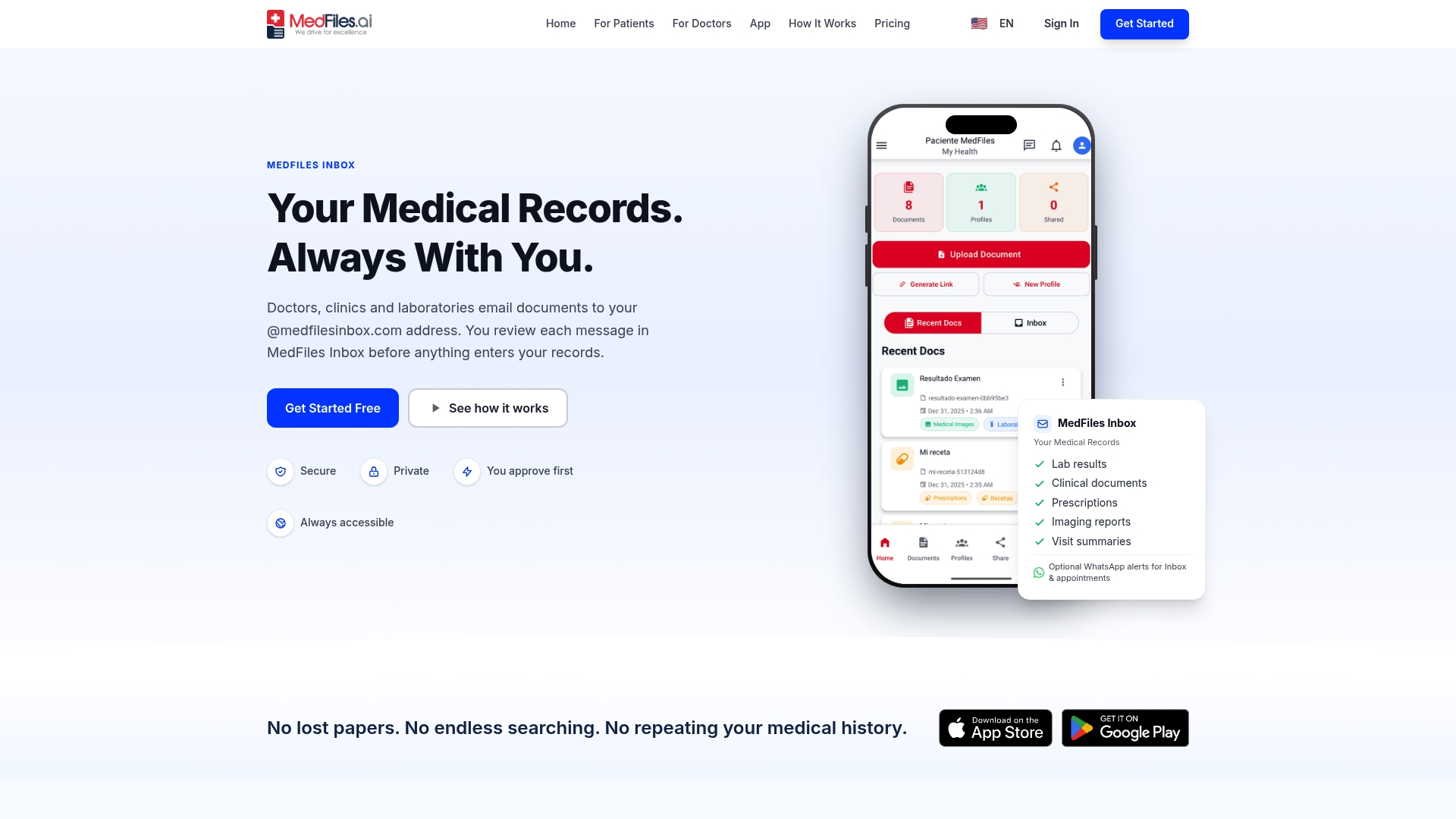
MedFiles Inbox can automatically receive documents from providers and labs by email or app, cutting manual uploads. The platform stores labs, prescriptions, reports, and images in a single encrypted account that you can access on web and mobile. According to the company, MedFiles.ai runs on HIPAA-ready infrastructure with end-to-end encryption.
Core Features
MedFiles.ai provides secure cloud storage for medical documents and AI-powered organization that tags and surfaces records for quick search. It supports personal and family health profiles, including multi-profile management for pets and household members, and creates secure sharing links for doctors and family. The service includes web and mobile access, optional WhatsApp alerts, and automatic receipt through MedFiles Inbox.
Key Differentiator
The platform pairs its AI sorting with direct receipt of documents from providers and joint family profiles in one account. That combination reduces manual filing and keeps related records grouped by person and by episode of care.
Pros
MedFiles.ai centralizes personal and family medical records, which reduces paper clutter and speeds access during emergencies. Permission based sharing gives you control when you send links to doctors or relatives, and the automatic inbox cuts the work of collecting lab results. The mobile apps keep records available while traveling and the AI features make finding specific reports faster.
Cons
- Limited storage on the free tier may not cover extensive medical histories for people with long records.
Who It’s For
This product fits individuals, parents, and caregivers who want a private, organized place to store health documents for multiple people. It suits anyone who needs fast access during travel or emergencies and people who receive documents from clinics by email. It also works for families that prefer a single account for shared records.
Unique Value Proposition
MedFiles Inbox pulling documents directly from providers removes the need to forward or upload files manually. That reduces setup time for family profiles and keeps documents attached to the correct person automatically. For households that juggle school forms, vaccination records, and specialist notes, that workflow cuts repetitive tasks.
Real World Use Case
A parent creates profiles for two children and a spouse, then links the family account to clinic emails. Lab results arrive in the inbox and the AI tags vaccinations and visit summaries. The parent shares a secure link with a new pediatrician before a travel appointment.
Pricing
Free to start with tiered paid plans for Individuals, Family, and Family+ accounts. Plans range from $2.49/month to $19.99/month with annual discounts and occasional special offers. Paid tiers increase storage, sharing options, and analysis features.
Website: https://medfiles.ai
OneRecord
At a Glance
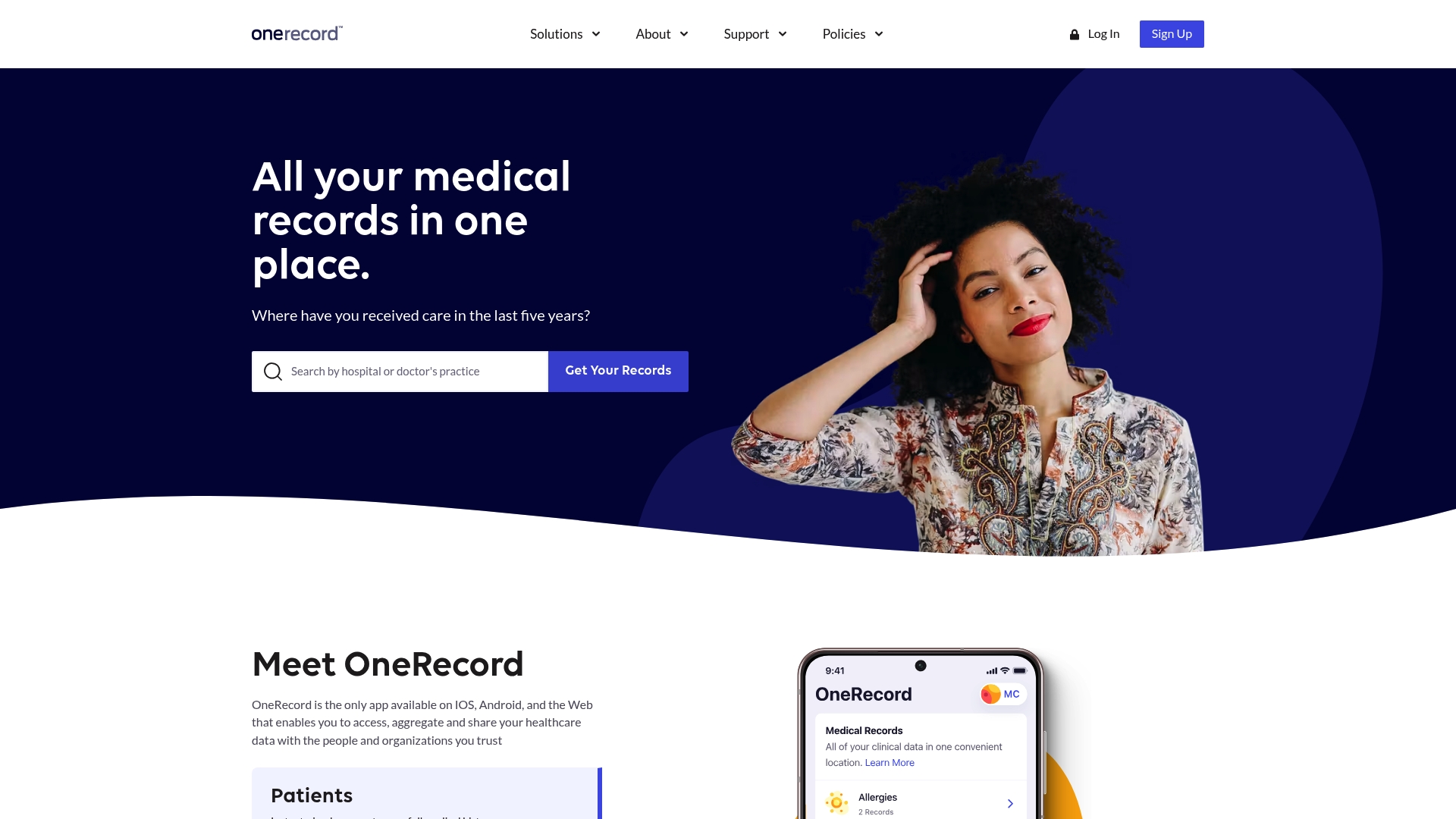
According to the company, OneRecord connects to over a million providers nationwide. That reach links many provider systems and health plans into a single access layer. The platform offers apps on iOS, Android, and web so patients, clinicians, payers, and developers can retrieve records from multiple sources.
Core Features
OneRecord centralizes patient records and provides universal access via app and web while connecting with major EHR vendors such as Epic, Cerner, and Meditech. The platform uses standards like FHIR and advertises support for 21st Century Cures Act requirements, and the company states it supports ONC, CMS, and HIPAA compliance. A unified API enables real time data exchange for developer integrations and clinical workflows.
Key Differentiator
The vendor advertises nationwide coverage and health plan connectivity through secure, standards based APIs. That focus on broad network links separates OneRecord from point solutions that only cover single systems or regions.
Pros
OneRecord offers wide interoperability with many EHR systems and health plans, which reduces manual record hunts for patients and providers. Cross platform apps let people access their consolidated records on phones or desktops. Security and regulatory alignment are emphasized, and that compliance claim is reinforced by industry partnerships such as the AWS Healthcare Accelerator.
Cons
-
Public details about the user interface and customer support are sparse, which makes hands on evaluation necessary.
-
Large healthcare organizations may face considerable integration complexity that requires dedicated IT resources and vendor collaboration.
-
Pricing is not published publicly, so budget planning requires direct contact with the vendor.
When It May Not Fit
If you need clearly published pricing or a ready made support SLA, OneRecord may not match that procurement style. Organizations without internal FHIR experience or integration staff will likely need outside technical support. Small practices that want a turnkey patient portal without developer work may find the platform more than they need.
Who It’s For
Healthcare providers, health plans, and developers building apps that require broad interoperability will benefit most. Patients who want to consolidate records across many institutions also gain value. Teams focused on meeting patient access rules and linking multiple networks will find the platform aligned to those goals.
Real World Use Case
A hospital integrates OneRecord to connect with a nationwide network of EHRs and pull patient data into care workflows in near real time. Clinicians see recent labs and visit notes without manual requests, which shortens chart reconciliation. The hospital also uses the API to power a patient facing app that centralizes records for follow up care.
Pricing
The company does not publish pricing publicly. Prospective buyers should contact OneRecord for tier details, enterprise quotes, and integration costs.
Website: https://onerecord.com
iShare Medical
At a Glance
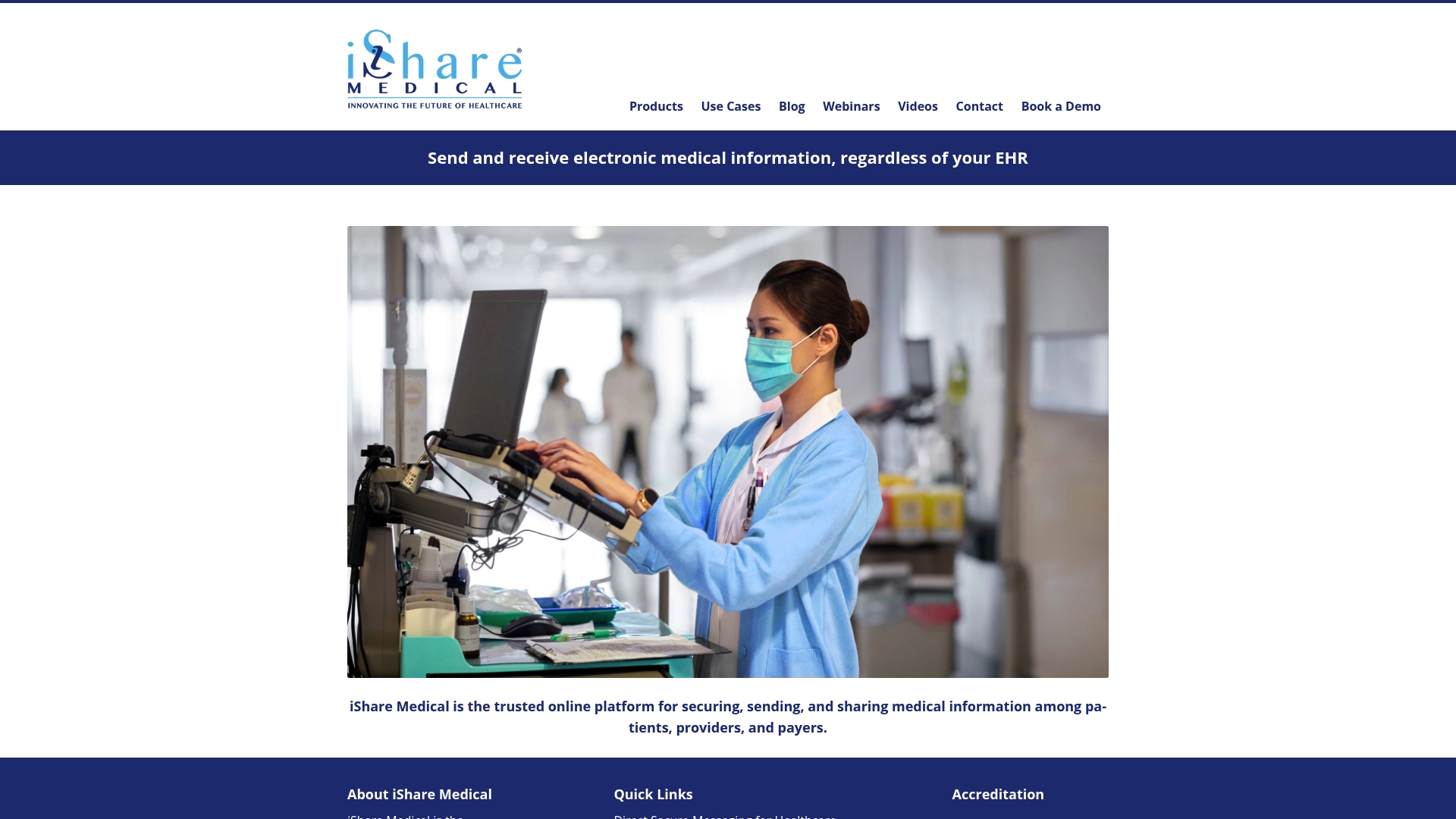
Supports secure transmission across different EHR systems without restriction by vendor or care location. The platform includes a physician direct address directory and direct secure messaging for providers. It also integrates with Health Information Service Provider infrastructure to carry encrypted records between organizations.
Core Features
iShare Medical enables encrypted electronic transmission of medical records, direct secure messaging for clinician communication, and a searchable physician direct address directory. The platform provides HISP integration and access to patient terms and privacy documentation. These capabilities focus on provider level exchange and organization to organization workflows.
Key Differentiator
iShare Medical focuses on universal exchange across EHR boundaries. It moves records between systems without being tied to a single EHR vendor or care location. That design supports care coordination when sending records between hospitals, specialists, and payer organizations.
Pros
According to the company, the platform holds accreditation and follows applicable legal standards. That claim suggests formal controls for secure handling of health information. The service supports provider to provider and provider to patient communication, which helps handoffs and follow up. The physician direct address directory and HISP connectivity simplify routing medical records across systems.
Cons
- Not explicitly built for patients to send or retrieve records directly without provider cooperation.
- Functionality depends on healthcare providers following electronic record sharing protocols and using compatible addresses.
- The public material offers limited technical detail about specific EHR integrations and mapping capabilities.
When It May Not Fit
Organizations needing a consumer facing app for patients to initiate record transfers will find a mismatch. Small practices without HISP support may struggle to connect or receive records from partners. Teams that require explicit details about EHR adapters and mapping should ask for technical documentation before committing.
Notable Integrations
- Health Information Service Provider (HISP)
Who It’s For
Healthcare organizations, medical practices, and health information organizations that require secure, organization level record exchange. IT teams at hospitals and regional health systems looking to connect multiple EHRs will benefit. Payers and clinical networks that need encrypted messaging between entities will find this relevant.
Real World Use Case
A hospital sends complete patient records to a specialist clinic that uses a different EHR. The hospital routes records through the platform using the recipient’s direct address and HISP path. The specialist receives encrypted records and adds them to the local chart for faster care coordination.
Pricing
The vendor lists pricing as not applicable. The offering appears informational and oriented to institutional deployment rather than retail subscriptions. Contact iShare Medical for access, implementation options, and any service fees.
Website: https://isharemedical.com
Comparison of alternatives
In comparing options for digital health record management, notable differences emerge concerning focus and functionality. Each platform addresses specific needs, providing unique benefits for varied user situations.
Integration and interoperability
OneRecord demonstrates a significant advantage in interoperability. Its ability to aggregate records across over one million providers enables users to consolidate medical information from multiple sources. This is particularly effective for patients who interact with a vast and varied healthcare network. Health providers with practice networks spanning different regions could leverage OneRecord’s compatibility with major EHR standards like FHIR to streamline inter-provider data sharing.
Family and multi-profile management
MedFiles.ai excels in creating family health profiles. It allows users to consolidate medical records for multiple family members or even pets under a single account, linked thoroughly with AI classification. This ensures faster access to diverse records, benefiting caregivers managing substantial health documentation.
Secure document transmission
iShare Medical serves healthcare organizations and systems that prioritize secure inter-organizational communication. Through direct secure messaging and Health Information Service Provider infrastructure, it facilitates encrypted records exchange, even between disjointed systems. Such capabilities are well-suited for regional health systems or clinical networks striving for unified communication compliance.
Best fit
- If you need an approachable platform for managing personal and family health records with ease, MedFiles.ai offers tools tailored to organizing and accessing diverse medical documentation.
- For consolidating widespread medical records across a range of providers and adhering to interoperability standards, OneRecord serves as an efficient solution.
- Healthcare organizations requiring secure records exchange between diverse systems should consider iShare Medical for its specialized encrypted communication capabilities.
Our pick
MedFiles.ai stands out for its focus on user-friendly multi-profile medical record management, particularly benefiting families and caregivers. It streamlines the documentation process with features like automatic email linking and intelligent AI organization. While other platforms provide value for interoperability or institutional use, MedFiles.ai offers targeted advantages for individuals prioritizing organized health records.
For users seeking personal medical record management solutions, comparing platforms based on their features, interoperability, and pricing provides clarity.
| Product | Core Feature | Key Differentiator | Pricing | Notable Limitation |
|---|---|---|---|---|
| Medfiles | Secure storage and AI-powered organization | MedFiles Inbox for direct documents | $2.49–$19.99/month | Limited storage on free tier |
| OneRecord | Central access across EHR systems | Nationwide health plan connectivity | Price not published | Sparse details require hands-on evaluation |
| iShare Medical | Encrypted record transmission | Universal EHR exchange | Price not applicable | Requires provider cooperation for consumer record transfers |
How to Manage Your Family Medical Records Without Extra Hassle
Keeping your family’s medical history organized can feel overwhelming, especially when documents come from multiple providers and labs. You want a secure place that stores records like labs, prescriptions, and images all in one encrypted account. You also need quick access during emergencies or while traveling.
Medfiles helps you with those challenges. It automatically receives and sorts documents directly from providers. You can manage multiple profiles for your family and pets. Share securely with doctors and relatives with ease. Medfiles uses HIPAA-ready encryption to keep your data private. See how Medfiles simplifies storing, organizing, and sharing your health records so you gain peace of mind with one reliable platform.
Medfiles keeps your entire medical history safe and available. Get started now to reduce manual uploads and share instantly when you need it most.
FAQ
Can Medfiles automatically receive documents from my healthcare providers?
Medfiles can automatically receive documents through Medfiles Inbox, which cuts down on manual uploads. This feature allows your healthcare documents to arrive directly into your secure account without extra effort from you.
What is the main difference between OneRecord and Medfiles?
OneRecord boasts connectivity to over a million providers nationwide, which enables broader interoperability across different health systems. Medfiles, on the other hand, excels in automatically receiving documents from providers and consolidating personal and family health records in one sensitive account.
How does Medfiles organize my medical documents?
Medfiles uses AI-powered organization to tag and surface records, making it easier to find specific documents quickly. This feature significantly speeds up your ability to access important medical information when you need it.
Is there any limitation on storage in Medfiles?
The free tier of Medfiles has limited storage that may not cover extensive medical histories for individuals with long records. You should note this if you have substantial healthcare documentation to manage.
Who can benefit from using Medfiles?
Individuals, parents, and caregivers looking for a secure place to organize medical documents for multiple family members can benefit from Medfiles. This platform is particularly useful if you require fast access to records during travel or emergencies.