Patient Health Checklist: Your Complete 2026 Guide
Maximize your healthcare visits with our 2026 patient health checklist. Ensure accuracy, improve communication, and enhance your care!

Patient Health Checklist: Your Complete 2026 Guide
Walking into a doctor’s appointment without a patient health checklist is like going to the grocery store without a list. You forget things, miss opportunities, and leave wishing you had said more. For patients and caregivers managing complex health situations, this preparation gap is even more costly. Missed details mean repeated visits, medication errors, and miscommunication that affects your care. This guide gives you a clear, practical framework to build and use a checklist that makes every healthcare visit count.
Table of Contents
- Key Takeaways
- 1. What makes an effective patient health checklist
- 2. The core items every checklist for patient care should include
- 3. Comparing your checklist tools and approaches
- 4. Preventive health checklist: preparing for your annual wellness visit
- 5. Applying your checklist to different care settings
- My honest take on patient-prepared checklists
- How Medfiles makes managing your health checklist simpler
- FAQ
Key Takeaways
| Point | Details |
|---|---|
| Medication accuracy matters most | Bringing a detailed medication list reduces errors by 37% during healthcare visits. |
| Physical pill bottles still win | The brown bag method catches discrepancies that digital lists miss in 22% of cases. |
| Communication prep is non-negotiable | Nearly 79% of diagnostic safety events trace back to poor patient-clinician communication. |
| Update your checklist before every visit | Medication needs, symptoms, and providers change, so your records should too. |
| Digital storage gives you lasting access | Secure platforms let you share records instantly with any provider, anywhere. |
1. What makes an effective patient health checklist
Not every checklist is created equal. A generic list pulled from a search result might cover the basics, but an effective health assessment checklist is built around your specific conditions, history, and goals.
Start by thinking in categories. Your checklist should address four core areas: medications, medical records, current symptoms, and your questions for the provider.
Medication accuracy is the most critical category. Your list should include each medication’s name, dose, frequency, purpose, and the prescriber who ordered it. Patients with detailed medication lists experience 37% fewer medication errors during visits. That number alone justifies the effort.
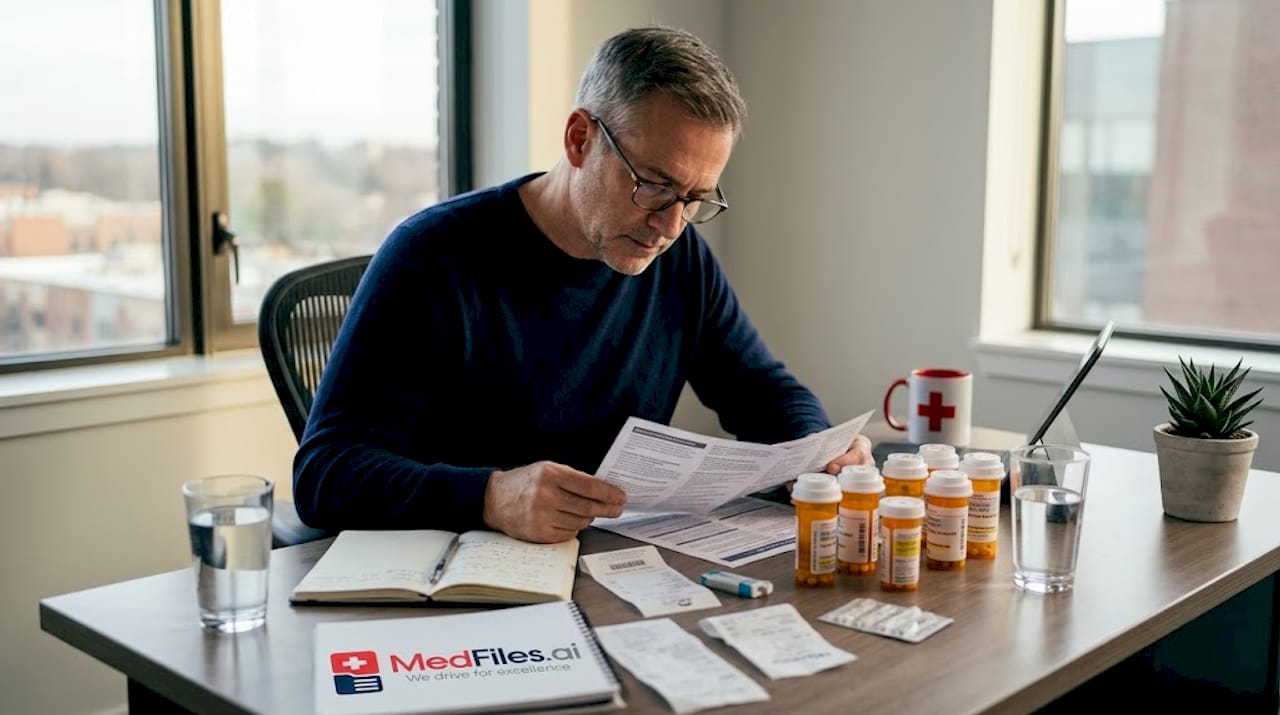
Organized records come next. This means your immunization history, past lab results, imaging reports, specialist letters, and your family health history. Knowing that your father was diagnosed with Type 2 diabetes at age 52 is the kind of detail that shapes a doctor’s recommendations for you.
Symptom tracking fills in what medical records cannot. When did the pain start? Does it happen after meals? What makes it better or worse? Lifestyle notes, such as sleep patterns, exercise habits, and alcohol use, round out the picture.
Finally, prepared questions turn a passive appointment into a real conversation. Write them down before you go. Prioritize the top three in case time runs short.
Pro Tip: Use a structured patient wellness survey or worksheet before each visit. The Agency for Healthcare Research and Quality (AHRQ) offers tools specifically designed to help patients organize symptoms and questions before seeing a doctor. These take about 10 minutes and make a measurable difference in how your visit goes.
2. The core items every checklist for patient care should include
Here is what to gather and keep updated. Think of this as your standing checklist for patient care, not a one-time exercise.
- Full medication list: Name, strength, how often you take it, why you take it, and who prescribed it. Include vitamins, supplements, and over-the-counter medications.
- Physical pill bottles: Bring them to every visit. The brown bag medication review method reduces medication errors by 67% compared to verbal lists alone.
- Health insurance card and photo ID: Required at almost every visit. Keep digital copies as backup.
- Family health history: Record first-degree relatives (parents, siblings, children) with their age at diagnosis and specific conditions. “Heart disease in the family” is less useful than “father had a heart attack at 58.”
- Recent lab results and imaging: Bring copies of any bloodwork, X-rays, MRIs, or specialist reports from the past 12 months.
- Symptom log: Note timing, intensity on a 1 to 10 scale, duration, and any triggers you have identified.
- Lifestyle factors: Alcohol use (how many drinks per week), tobacco use, recreational drug use, exercise frequency, and average nightly sleep. Providers need this to make accurate recommendations.
- Provider list: Names and contact information for every specialist, therapist, or other provider you see. This prevents coordination gaps.
- Prioritized questions: Write at least five questions before each visit. Rank them so the most urgent comes first.
Pro Tip: Transfer your pills to a bag but keep them in their original bottles. The FDA-mandated label data on the bottle, including lot numbers and expiration dates, is information that apps and digital lists cannot replicate. Virtual pill reviews miss 22% of discrepancies that in-person checks catch.
3. Comparing your checklist tools and approaches
You have options when it comes to how you build and use your checklist. Each approach has real trade-offs.
| Tool | Best for | Limitation |
|---|---|---|
| Physical pill bottles | Medication accuracy, clinical verification | Bulky, easy to forget |
| Medication apps | Daily tracking, reminders | Miss 22% of discrepancies vs. in-person review |
| Paper checklists | Simple, no tech required | Easy to lose, hard to share |
| Digital health platforms | Secure storage, instant sharing, multi-provider access | Requires setup and consistent updating |
| AHRQ patient worksheets | Symptom communication, diagnostic prep | Best for office visits, less useful for emergencies |
The most common mistake is treating this as an either/or choice. Combining physical bottles with digital records yields the highest accuracy in medication reconciliation.
For telehealth visits, your approach shifts. You cannot hand over pill bottles through a screen, so a detailed digital medication list becomes non-negotiable. Have your symptom log and questions open on a second screen or a notepad during the call.
For in-person visits, bring the physical documents. Bring the bottles. Bring the list. Do not rely on the clinic to have your records, even if they say they do.
One thing that does not change between visit types: communication preparation reduces diagnostic errors. Nearly 79% of diagnostic safety events in office settings trace back to miscommunication between patient and provider. Your checklist is your best defense.
- Organized records reduce the chance your provider works from incomplete information
- A symptom log with specific details helps providers distinguish between conditions with similar presentations
- Written questions keep you from freezing up or forgetting what you wanted to ask
4. Preventive health checklist: preparing for your annual wellness visit
Your Annual Wellness Visit (AWV) is not a physical exam. This trips up a lot of patients. The AWV focuses on preventive planning, not diagnosing or treating current conditions. That changes what you need to bring and what you should expect.
Medicare beneficiaries completing an AWV are asked to fill out a Health Risk Assessment covering demographics, behavioral risks, and functional status. It takes under 20 minutes and forms the foundation of your personalized prevention plan for the year.
Here is how to prepare your preventive health checklist for an AWV:
- Complete the Health Risk Assessment before your appointment if your provider sends it in advance
- Bring your updated medication list and supplement list
- Note any falls, balance issues, or changes in memory in the past year
- Prepare a list of recommended screenings you have not yet completed (colonoscopy, mammogram, bone density scan)
- Review your immunization record and flag any vaccines you may be due for
For urgent care or emergency visits, your checklist priorities shift completely. The most critical items are your medication list, allergy list, and emergency contacts. Keep a condensed version saved digitally or on a card in your wallet.
Caregivers managing checklists for a child, elderly parent, or other dependent should maintain a separate profile for each person. Note the name and contact of each person’s primary care provider, current diagnoses, and any legal documents such as healthcare proxy or power of attorney.
Pro Tip: Set a calendar reminder to review and update your checklist every six months, or after any hospitalization, new diagnosis, or medication change. Annual medication reconciliation is recommended by the American Academy of Family Physicians because medication needs change more often than most patients realize.
5. Applying your checklist to different care settings
Your checklist is not a static document. It is a living tool that should adapt to whatever you are facing.
For routine primary care visits, the full checklist applies. Bring everything, ask your questions, and leave with a clear understanding of any next steps.
For specialty consultations, bring the records that relate specifically to why you are there. A cardiologist does not need your dermatology reports, but they do need your full medication list, your primary care notes, and any relevant lab work or imaging.
For second opinions, bring a complete copy of your records without commentary. Let the new provider review the facts independently. Patient self-advocacy through documented symptoms and health history is evidence, not defensiveness.
Your medical records and documents are not the provider’s responsibility to chase down. They are yours to manage and share. Patients who take this seriously get better care. That is not an opinion. It is a pattern.
After each visit, note what the provider said, what was recommended, and what follow-up is needed. This becomes part of your record for the next visit. Patient feedback also directly shapes how hospitals and practices measure and improve care quality, so completing any post-visit surveys you receive is worth the two minutes it takes.
My honest take on patient-prepared checklists
I have worked with health information long enough to have a strong opinion on this: most patients drastically underestimate how much their preparation affects the quality of care they receive.
Providers are working from the information in front of them. When that information is incomplete, they fill in gaps using assumptions and defaults. Sometimes those defaults are fine. Sometimes they are not.
You are the only person in your care who shows up to every appointment. Your primary care doctor does not know what your cardiologist said last month. Your pharmacist does not know about the supplement you started taking. You are the connective tissue in your own healthcare, and documenting your health history is how you make that connection work.
What I have also seen is that patients who come prepared are treated differently. Not because providers are biased toward the organized, but because organized patients ask better questions, give clearer histories, and make it easier to reach the right diagnosis faster. That collaboration produces better outcomes.
The checklist is not busywork. It is the mechanism by which you go from passenger to partner in your own care.
— Team Medfiles
How Medfiles makes managing your health checklist simpler
Building your patient health checklist is the first step. Keeping it current, secure, and accessible is where most people struggle. That is exactly what Medfiles was built to solve.
Medfiles is a HIPAA-ready digital platform where you can store your complete medical history: lab results, prescriptions, imaging, specialist reports, and more. Everything is organized automatically and encrypted, so your records are protected and ready when you need them.
For caregivers managing multiple family members, Medfiles supports multi-profile management so you can keep everyone’s records separate and organized in one place. You can share records securely with any provider in seconds, which means no more faxing, no more repeated forms, and no more gaps in your care history.
Explore pricing and plans to find the option that fits your needs, whether you are managing your own health or coordinating care for your whole family.
FAQ
What should I include in a patient health checklist?
Your checklist should cover your full medication list, health insurance information, family health history, recent lab results, a symptom log, lifestyle factors, your list of providers, and your prepared questions for the visit.
How does the brown bag method reduce medication errors?
Bringing your physical pill bottles to appointments allows clinicians to verify label details that digital lists miss. This method reduces medication errors by 67% compared to verbal lists alone and speeds up medication reconciliation by 38%.
How often should I update my health checklist?
Update your checklist every six months at minimum, and immediately after any hospitalization, new diagnosis, or medication change. The American Academy of Family Physicians recommends annual medication reconciliation at minimum.
How do I prepare a checklist for an Annual Wellness Visit?
Complete your Health Risk Assessment before the appointment if possible, bring your updated medication and immunization records, and note any changes in balance, memory, or functional status. Remember the AWV is focused on prevention planning, not treating current conditions.
Can caregivers use a single checklist for multiple family members?
No. Each person should have their own checklist and profile, with their specific medications, diagnoses, providers, and health history kept separate. Digital platforms like Medfiles support multi-profile family management to make this easier.