AI health analysis: Better decisions and emergency readiness
Discover why use AI for health analysis to make better decisions and enhance emergency readiness with tailored insights from your health data.

AI health analysis: Better decisions and emergency readiness
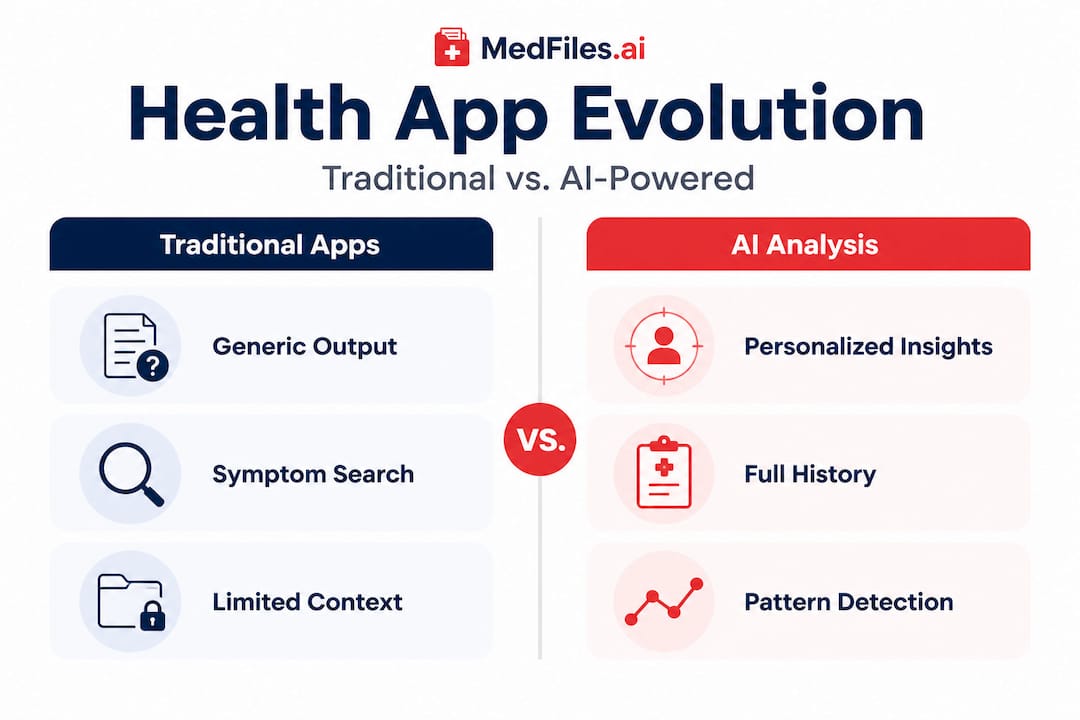
Not all digital health tools are built the same. Most apps hand you a list of possible conditions based on a few tapped symptoms, then leave you to sort out the rest. That approach gets it wrong 66% of the time, because it ignores everything that makes your health history unique. AI-powered health analysis works differently. It reads your actual records, tracks patterns across time, and gives you personalized guidance that reflects your real medical picture. For individuals managing ongoing conditions and families juggling multiple health profiles, this is a genuine step forward.
Table of Contents
- What makes AI-powered health analysis different?
- How does AI analyze your health records?
- How accurate and reliable is AI health analysis?
- Practical benefits for your family: Decision-making, pattern recognition, and safety
- Our take: Why families shouldn’t wait to adopt AI-driven health analysis
- Take the next step: Start AI-powered health analysis for your family
- Frequently asked questions
Key Takeaways
| Point | Details |
|---|---|
| Personalized insights | AI delivers health recommendations based on your complete medical history, not just generic input. |
| Improved emergency prep | Instant access to your family’s health context helps make smarter choices in urgent situations. |
| Context-aware accuracy | AI analyzes longitudinal health data, increasing accuracy over traditional apps. |
| Works alongside doctors | AI is best used as a second opinion and should inform but not replace professional care. |
| Easy integration | Families can start benefiting immediately by digitizing records and using AI-driven tools. |
What makes AI-powered health analysis different?
Now that the importance of tailored guidance is clear, let’s explore how AI achieves this personalized insight.
Standard health apps treat every user the same. You enter symptoms, the app runs a search against its database, and out comes a generic result. It doesn’t know you had a reaction to penicillin three years ago. It doesn’t know your child has a history of febrile seizures. It starts fresh every single time.
AI-powered analysis does the opposite. It builds comprehensive health profiles from your actual medical records, including medications, allergies, past diagnoses, lab trends, and visit history. Each recommendation is filtered through that full picture. The result is guidance that actually applies to you, not just to someone who typed in similar symptoms.
This shift matters enormously for families. Managing health management benefits for families means keeping track of multiple people, each with distinct medical needs. AI can hold and cross-reference all of that at once, flagging things like a drug interaction between a parent’s new prescription and a supplement their teenager takes.
“Generic symptom checkers are wrong 66% of the time. AI tools that analyze your longitudinal health data perform significantly better because they understand context, not just isolated complaints.”
Here’s how the two approaches compare side by side:
| Feature | Traditional health apps | AI-powered analysis |
|---|---|---|
| Personalization | Generic, symptom-based | Tailored to your full medical history |
| Data continuity | Starts fresh each session | Builds on past records and trends |
| Medication awareness | None | Checks against your current medications |
| Allergy recognition | None | Cross-references known reactions |
| Literature-backed insights | Rarely updated | Continuously trained on current research |
| Family management | Single user | Multi-profile, context-aware |
The differences are stark. And the personalized care in wellness research backs this up, showing that individualized approaches consistently outperform generic ones for long-term outcomes.
Key advantages of AI-powered health analysis include:
- Personalization: Recommendations reflect your unique history, not population averages.
- Data continuity: Your profile grows smarter over time as you add records.
- Medication and allergy integration: Alerts are based on what you actually take and react to.
- Literature-backed guidance: AI models are trained on current medical research.
- Family-wide oversight: Manage every member’s profile from one secure place.
Pro Tip: The more consistently you update your records, including adding new test results, prescription changes, and visit summaries, the sharper your AI-driven recommendations become. Engagement is what drives accuracy.
How does AI analyze your health records?
Understanding how AI works sets the stage. Next, let’s look at how accurate these tools are and what you can realistically expect.
AI health analysis uses several methods, each suited to different types of medical data. The three main approaches are machine learning, deep learning, and large language models (LLMs). You don’t need to understand the technical details to benefit from them, but knowing the basics helps you trust the process.
Machine learning works on structured data. Think lab values, blood pressure readings, cholesterol numbers, medication lists. It scans these for patterns across time, identifying trends that might signal a developing condition before symptoms appear. For example, it might notice that your fasting glucose has been creeping upward over 18 months, even if each individual reading looked acceptable to a busy clinician.
Deep learning handles more complex patterns across larger datasets. It excels at recognizing subtle correlations that are too intricate for traditional statistical analysis. Imaging data, multi-system health trends, and rare condition indicators are areas where deep learning shines.
LLMs, or large language models, are the technology behind tools that read and interpret the unstructured text in doctor’s notes, clinical summaries, and discharge reports. This matters because a significant portion of your health record is written in plain (or not-so-plain) clinical language, not neat spreadsheet rows. LLMs extract and summarize this information with up to 99.8% accuracy, meaning almost nothing gets lost in translation.
Here’s how the process works step by step:
- Import your records: Upload lab results, clinic notes, prescriptions, imaging reports, and hospital summaries.
- AI analyzes the data: Machine learning scans structured values; LLMs read unstructured notes and extract key clinical details.
- Patterns and risks are identified: The system flags trends, potential interactions, and gaps in care.
- Summaries and recommendations are generated: You receive plain-language insights tailored to your specific profile.
- You review and act: Take findings to your care team, prepare questions, or simply stay informed between visits.
Following a solid medical records workflow guide makes this process even smoother, especially for families managing records for multiple people. And if you’re still weighing whether to go digital at all, the benefits of storing medical records digitally are well established in terms of both safety and accessibility.
For families curious about combining AI health analysis with genetic data, comprehensive DNA tests can add another layer of personalization, helping AI tools factor in hereditary risk when assessing your health profile.
| AI methodology | Best used for | Typical accuracy range |
|---|---|---|
| Machine learning | Structured lab data, vitals trends | 80-95% depending on dataset |
| Deep learning | Complex pattern recognition, imaging | 85-97% in validated studies |
| Large language models | Clinical notes, reports, summaries | Up to 99.8% extraction accuracy |
How accurate and reliable is AI health analysis?
Now that we’ve covered accuracy at a technical level, let’s focus on what this means for real families making real health decisions.
AI is impressive, but it’s not infallible. Knowing where it excels and where it has limits helps you use it wisely.
“Generative AI tools show a pooled diagnostic accuracy of approximately 52%, while AI assistance improves physician top-1 diagnostic accuracy by 13%. The combination of human expertise and AI consistently outperforms either alone.”
That context from AI diagnostic accuracy benchmarks tells a clear story. AI is genuinely useful and outperforms non-expert humans in many scenarios. But the best outcomes happen when AI and trained clinicians work together. Think of it as a powerful research assistant that prepares you and your doctor for a sharper, more productive conversation.
Here’s when you can rely more heavily on AI guidance:
- Tracking chronic conditions: AI excels at spotting slow-moving trends in conditions like diabetes, hypertension, or thyroid disorders.
- Medication review: AI can flag potential interactions in a way that’s faster and more thorough than manual checking.
- Understanding test results: AI can translate clinical language into plain terms before your follow-up appointment.
- Preparing for specialist visits: AI can compile relevant history so your specialist has full context immediately.
And here’s when you should always bring in a professional:
- New, severe, or worsening symptoms that could indicate an emergency.
- Any decision involving a significant medication change or stopping a prescribed treatment.
- Mental health concerns, where context and human judgment are irreplaceable.
- Diagnoses or treatment plans that will guide major health decisions.
Pro Tip: Use AI as a second opinion, not a final verdict. When AI analysis raises a concern, bring it to your doctor with the supporting data. That combination gives you the strongest possible outcome.
For families managing chronic illness, this is especially important. Preserving medical history over time gives AI tools the longitudinal data they need to detect meaningful changes, rather than reacting only to the most recent snapshot.
Practical benefits for your family: Decision-making, pattern recognition, and safety
With practical accuracy expectations in mind, let’s look at how you actually use AI tools to improve everyday health management.

The value of AI health analysis isn’t theoretical. It shows up in specific, everyday situations that families face regularly. Better decision-making, doctor visit prep, and emergency triage are the most reported benefits among individuals who use AI tools connected to their full medical records.
Here are the most impactful day-to-day uses:
- Identifying health trends: AI notices that your child’s recurring stomach complaints correlate with a specific medication, something you might miss across separate appointments months apart.
- Prepping for appointments: Generate a summary of recent lab changes, new symptoms, and current medications to bring to your next visit. Doctors get better information. You get better care.
- Family medication review: With multiple prescriptions across family members, AI can scan for interactions that even pharmacists sometimes miss during busy shifts.
- Pattern recognition for chronic conditions: Small, consistent changes in blood pressure, weight, or blood glucose are easier for AI to track than for any individual to monitor manually.
- Emergency readiness: If someone in your family needs emergency care, AI has their complete history instantly accessible, including blood type, allergies, and current medications.
- Reducing unnecessary visits: When AI analysis suggests a symptom is consistent with a known condition already being managed, you can make a more informed call about whether to wait or go in.
To integrate AI into your family’s health routine, follow these steps:
- Digitize all existing records: Scan paper documents and upload them to a secure platform. Include everything from immunizations to specialist reports.
- Choose a trusted, HIPAA-ready tool: Look for platforms with end-to-end encryption and a clear privacy policy.
- Set up individual profiles: Create separate profiles for each family member, including children and elderly relatives.
- Review AI findings regularly: Schedule a monthly check-in to review any flagged trends or updated recommendations.
- Confirm key findings with your care team: Share AI-generated summaries with your doctor to validate or contextualize insights.
- Update records after every visit: Keep the system current so AI always works from your most accurate, complete picture.
Following a clear approach to organizing family medical records ensures that AI tools have everything they need to give you accurate, relevant guidance. And for families dealing with complex or chronic conditions, personalized pain relief outcomes research confirms that personalized, data-driven approaches consistently deliver better results than one-size-fits-all treatment.
Our take: Why families shouldn’t wait to adopt AI-driven health analysis
The conventional wisdom is to wait until technology matures before adopting it. With AI health analysis, that advice gets it wrong. The tools available today are already outperforming the generic apps most families rely on, and they’re improving every month. Waiting means your family misses out on real, ongoing improvements that could change how you catch and manage health issues.
Here’s the truth most articles won’t say plainly: the biggest barrier isn’t the technology. It’s the habit. Families who see the most benefit from AI health tools are the ones who engage consistently. They upload records after appointments. They review AI summaries before seeing a specialist. They treat their health data as a living, evolving resource rather than a static file cabinet.
You don’t need technical expertise to do this well. You need consistency. A platform that makes uploading and reviewing easy removes the friction that stops most people from ever getting started.
We’ve also seen that families benefit most when they review AI outputs together, not just individually. When a parent understands what the AI flagged about their teenager’s recurring headaches, or when a couple reviews a shared cholesterol trend before a cardiology consult, health decisions become more informed and less stressful. That kind of leveraging digital health benefits is available right now, not in some future version of the technology.
“The evidence is consistent: human expertise combined with AI analysis produces better diagnostic and management outcomes than either approach alone. Families who engage with both are practicing the gold standard of modern personal health management.”
The edge goes to families who start now. Every month of data you build makes the AI smarter about your specific situation. That compound effect is real. Delaying means starting the clock later, and in health management, time and continuity matter.
Take the next step: Start AI-powered health analysis for your family
Your family’s health decisions deserve more than generic advice from apps that don’t know your history.
MedFiles.ai is built for exactly this. You can securely store, organize, and share your complete medical records in one place, then use AI health tools for patients to get personalized insights drawn from your actual data. Onboarding is straightforward: upload your existing records, set up profiles for each family member, and start receiving analysis that reflects your real health picture. No technical background needed. Your digital medical history solution is ready when you are. HIPAA-ready infrastructure, end-to-end encryption, and multi-profile management mean your whole family is covered, securely and simply. Start today and give your family the health clarity they deserve.
Frequently asked questions
How does AI use my medical history for better health decisions?
AI analyzes your full health profile, including medications, allergies, and past symptoms, to deliver personalized medical profiles and catch patterns that isolated symptom checks routinely miss.
Can I trust AI health analysis as much as a doctor’s advice?
AI tools are powerful but work best as a second opinion alongside professional care, since human and AI combined consistently outperforms either working alone.
What kinds of medical records can AI analyze?
AI reads both structured data and unstructured text, so it handles notes and reports from lab results, prescriptions, clinic visit summaries, and hospital discharge documents.
Will using AI for health analysis help in medical emergencies?
Yes. AI recalls your complete medical history instantly, supporting faster, context-aware triage decisions when every minute matters and you may not be able to recall critical details under stress.
Is my health data safe when using AI tools?
Reputable platforms use HIPAA-ready infrastructure and end-to-end encryption to protect your records. Always choose a trusted provider with a transparent privacy policy and clear data ownership terms.