Advantages of Health Data Sharing for Families
Discover the advantages of health data sharing for families. Improve care coordination, reduce errors, and enhance your healthcare experience.

Advantages of Health Data Sharing for Families
Health data sharing is defined as the exchange of medical information across providers, systems, and care settings to improve coordination, reduce errors, and produce better outcomes. The industry term for this practice is health information exchange, or HIE. The advantages of health data sharing touch every part of your healthcare experience, from a routine checkup to a life-threatening emergency. Initiatives like TEFCA (Trusted Exchange Framework and Common Agreement) are building the national infrastructure to make this exchange secure and universal. Understanding how HIE works puts you in a stronger position to manage your family’s care.
1. What are the core advantages of health data sharing?
Health information exchange gives your care team a complete picture of your medical history before they make a single decision. Without it, each provider starts from scratch, asking the same questions and ordering duplicate tests. With it, your records travel with you.
The impact on patient outcomes is measurable. Shared data reduces diagnostic errors, speeds up treatment decisions, and cuts unnecessary procedures. For families managing chronic conditions or multiple providers, that efficiency is not a convenience. It is a safety net.

2. How health data sharing improves emergency care
Emergency care is where the benefits of health data sharing become most visible. When paramedics arrive, they need your medical history immediately. Delays cost lives.
Hospitals participating in emergency data digitization programs achieved a 95% real-time transfer success rate during critical patient handovers. That figure means nearly every ambulance-to-hospital transfer completed with full, accurate data in real time. The London 999 Transfer of Care program demonstrated this at scale, replacing paper forms with digital records across the city’s emergency network.
The time savings are equally significant. Proactively shared medical history saves 2–5 minutes per patient encounter. In emergency medicine, those minutes determine whether a patient receives treatment before or after a critical window closes.
Key outcomes from emergency data sharing programs include:
- Faster triage: Clinicians skip repetitive history-taking and act on verified data immediately.
- Fewer handover errors: Digital records eliminate illegible notes and missing fields.
- Better trauma readiness: Integrated EMS and hospital data cut trauma designation prep time from several hours to under 45 minutes per facility.
- Continuous quality improvement: Bidirectional EMS-hospital data exchange gives emergency responders outcome feedback, helping them improve protocols over time.
The ambulance health data sharing advantages are not theoretical. They are documented, measurable, and growing.
3. How interoperable systems benefit your everyday care
Interoperability means your health data moves with you, not just in emergencies but at every appointment. The TEFCA framework shifts the model from point-to-point connections between individual providers to a “network of networks.” Your records become accessible across any participating system.
The cross-provider data sharing advantages are immediate for patients. You stop repeating your medication list at every new office. Your specialist sees your primary care notes before you walk in. Your lab results arrive in your chart automatically.
This matters most for families managing ongoing conditions. A child with asthma, a parent with diabetes, or a grandparent recovering from surgery all benefit when every provider shares a single, current record. Value-based care models, which reward outcomes over volume, depend on this kind of data flow to function.
Pro Tip: Ask your primary care provider whether their system participates in a health information network like TEFCA. Patients must actively confirm participation. Interoperability does not guarantee universal data flow without your involvement.
4. How data sharing cuts administrative burdens for families
Administrative work is one of the most overlooked costs of fragmented healthcare. Families without shared records spend hours tracking down test results, correcting billing errors, and acting as couriers between providers.
When payers and providers share data, families experience fewer billing disputes and less administrative burden. That reduction is not minor. Billing errors and duplicate claims are among the most common sources of family healthcare stress.
The operational gains are just as real on the provider side. Healthcare systems automating EMS report ingestion processed over 20,000 EMS reports in a single year, cutting manual data entry errors significantly. Fewer errors mean fewer rejected claims, fewer correction cycles, and faster reimbursement.
For your family, the practical benefits include:
- No more paper chasing: Records transfer digitally between providers and insurers.
- Fewer duplicate tests: Providers see existing results before ordering new ones.
- Faster claims processing: Automated data exchange reduces the back-and-forth between billing departments.
- Less time on hold: Correct records mean fewer insurance disputes to resolve by phone.
The pros of sharing health information extend well beyond clinical care. They reach into your calendar, your inbox, and your wallet.
5. What privacy controls protect you when sharing health data
Privacy is the most common reason families hesitate to share health data. The concern is understandable. The reality is more reassuring than most people expect.
Modern platforms offer granular consent controls. You choose which providers see which records, and you can revoke access at any time. Granular sharing controls give patients real authority over their information, though some data remains accessible under HIPAA for direct treatment regardless of opt-out settings.
Here is how a well-designed sharing system protects you:
- Granular permissions: You grant access by provider, record type, or time period.
- Revocable consent: You withdraw access at any time without affecting your care.
- End-to-end encryption: Data in transit and at rest is protected from unauthorized access.
- Audit trails: You can see who accessed your records and when.
- HIPAA compliance: Federal law sets a baseline for how providers handle and protect your data.
Pro Tip: Before sharing records through any platform, confirm it uses end-to-end encryption and HIPAA-ready infrastructure. Medfiles, for example, builds both into every account by default.
The importance of health data exchange depends on trust. Strong privacy controls are what make that trust possible.
6. How sharing records supports long-term family health management
Managing a family’s health across years and providers is genuinely difficult without a central record. Pediatric records, specialist notes, vaccination histories, and imaging reports scatter across systems that rarely talk to each other.
Shared records solve this directly. When your family’s medical history lives in one place and flows to every provider who needs it, care becomes continuous rather than episodic. A new pediatrician sees your child’s full history on day one. An urgent care clinic knows about your allergy before prescribing. A specialist understands your baseline before your first appointment.
Platforms like Medfiles support family medical record management by consolidating records for every family member, including pets, under one account. That single source of truth becomes your most reliable health asset over time.
7. Why bidirectional data exchange creates better healthcare over time
Most people think of data sharing as a one-way transfer. The deeper benefit is bidirectional exchange, where information flows back to the original provider as well.
Bidirectional EMS-hospital data exchange creates learning health systems. Emergency responders receive outcome feedback on the patients they treated. They learn which interventions worked and which did not. That feedback loop improves protocols across the entire system.
For patients, this means the care you receive today is shaped by what worked for patients before you. Every shared data point contributes to a system that gets measurably better over time. That is the long-term impact of data sharing in healthcare, and it compounds with every exchange.
Key takeaways
Health information exchange delivers its greatest value when patients actively participate, share records across providers, and use platforms with strong privacy controls.
| Point | Details |
|---|---|
| Emergency care improves immediately | Digital handovers achieve a 95% real-time transfer success rate, saving 2–5 minutes per patient. |
| Interoperability requires patient action | Confirm your providers participate in networks like TEFCA to ensure your data actually flows. |
| Administrative burden drops significantly | Payer-provider data sharing reduces billing disputes and eliminates paper chasing for families. |
| Privacy controls are strong and specific | Granular consent, encryption, and HIPAA protections give you real control over who sees your records. |
| Bidirectional exchange improves care over time | Feedback loops between EMS and hospitals create learning systems that raise care quality continuously. |
The case for taking health data sharing seriously
I have spent years watching families navigate healthcare with paper folders, fax confirmations, and phone calls to track down a single lab result. The frustration is real, and it is entirely avoidable.
What strikes me most about the current state of health information exchange is how much of the benefit depends on patient awareness. The infrastructure exists. TEFCA is building a national network. Emergency systems are digitizing handovers. Payers and providers are sharing data. But families who do not know to ask, confirm, or participate miss most of these gains.
The patients who benefit most are the ones who treat their medical records as an asset. They store them, organize them, and share them deliberately. They ask their providers which networks they participate in. They use platforms that give them control rather than leaving records scattered across portals.
The uncomfortable truth is that interoperability does not work automatically for you. It works for you when you engage with it. That shift in mindset, from passive recipient to active participant, is the single biggest factor in whether health data sharing actually improves your family’s care.
— Team
Medfiles makes secure health data sharing simple for families
Your family’s medical records should be ready when you need them, not buried in a portal you cannot access at 2 a.m. in an emergency room.
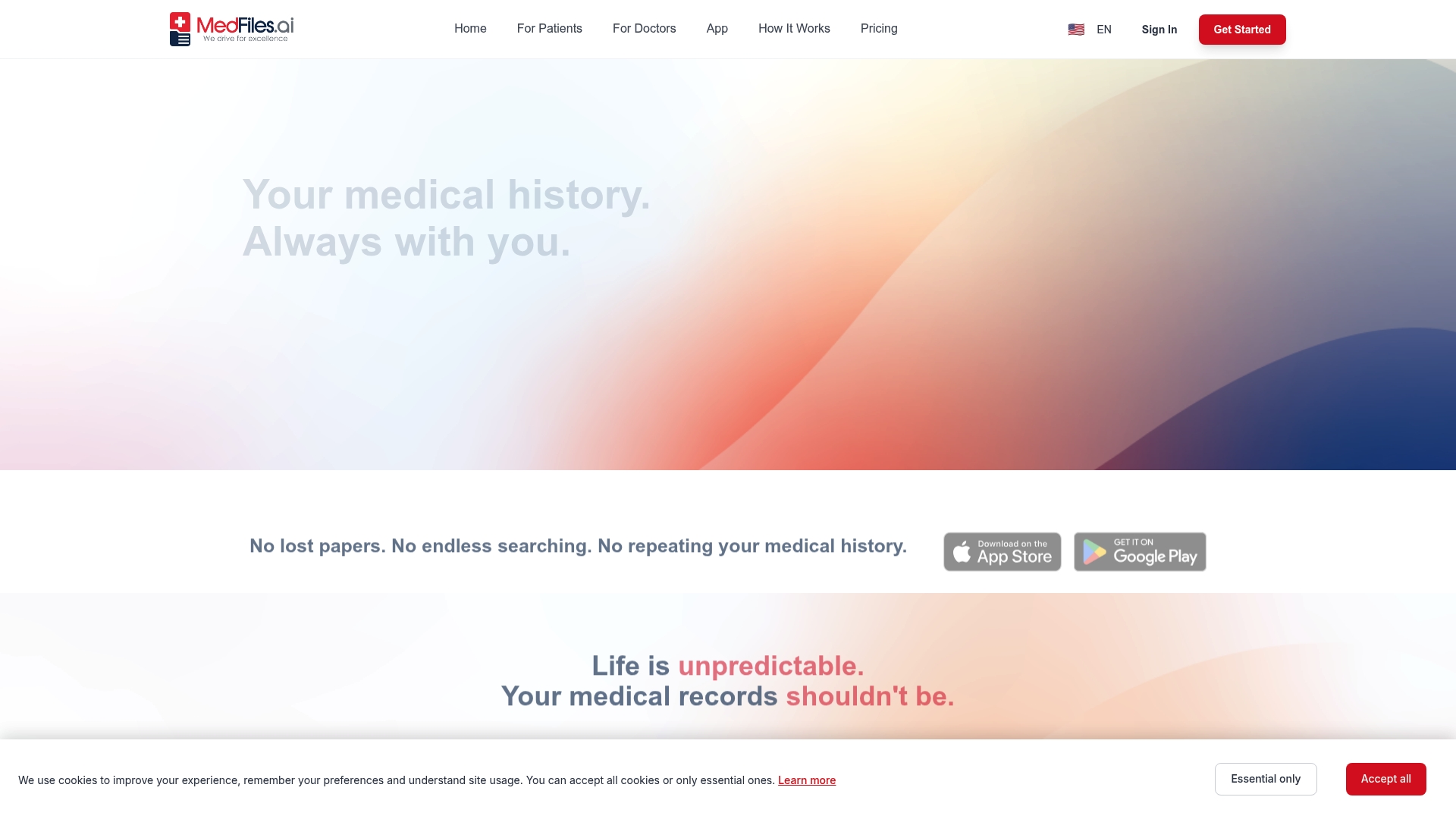
Medfiles gives you a centralized, encrypted space to store every document, from test results and prescriptions to imaging reports and vaccination records. You can share records securely with any provider in seconds, with full control over who sees what and for how long. HIPAA-ready infrastructure and end-to-end encryption protect every file. Whether you are coordinating care for a child, a parent, or yourself, Medfiles keeps your entire medical history organized, accessible, and ready to share at any moment.
FAQ
What is health data sharing?
Health data sharing, formally called health information exchange (HIE), is the electronic transfer of medical records between providers, systems, and patients to improve care coordination and reduce errors.
How does health data sharing improve emergency care?
Digital emergency handovers achieve a 95% real-time data transfer success rate and save 2–5 minutes per patient, giving clinicians verified information before treatment begins.
Is my health data safe when shared digitally?
Modern platforms use end-to-end encryption and HIPAA-compliant infrastructure. Granular consent controls let you choose exactly which providers access which records, and you can revoke access at any time.
What is TEFCA and why does it matter for patients?
TEFCA is a national initiative that connects health information networks under one framework, allowing your records to follow you securely across any participating provider.
Do I need to do anything to benefit from health information exchange?
Yes. Patients must confirm that their providers participate in an information network. Interoperability does not guarantee automatic data flow without active patient involvement.