Personal health management: Your guide to better outcomes
Discover what is personal health management and how proactive self-care can transform your health. Take control for better outcomes today!

Personal health management: Your guide to better outcomes
Most people believe health management happens in the doctor’s office. That’s the first misconception to drop. Personal health management is a proactive approach involving the daily monitoring, maintenance, and improvement of your health through self-care and smart record keeping. The decisions you make at home, what you eat, how you sleep, how you track and store medical information, shape your long-term health far more than a yearly checkup ever could. This guide shows you exactly how to shift from reactive to proactive, and gives your family the tools to take real control.
Table of Contents
- What is personal health management?
- The foundation: Personal health records (PHRs)
- Essential self-care strategies for better health
- Digital tools and technology: Enhancing personal health management
- Addressing challenges and equity in personal health management
- Our take: Why the real power of personal health management is family-driven, not just tech-enabled
- Next steps: Get organized and empowered with MedFiles.ai
- Frequently asked questions
Key Takeaways
| Point | Details |
|---|---|
| Proactive health starts at home | Individuals and families can drive better outcomes by managing records and self-care before clinical intervention. |
| PHRs are foundational | Keeping clear, updated personal health records enables more coordinated care and empowers self-management. |
| Lifestyle habits reduce disease risk | Healthy diet, regular exercise, sleep, and stress management are proven to cut risk for chronic illnesses. |
| Technology amplifies, not replaces | Wearables, apps, and digital solutions make health management easier, but should be paired with human support and family engagement. |
| Equity and access matter | Overcoming health literacy and access barriers is critical to making personal health management work for all families. |
What is personal health management?
Personal health management (PHM) is not a medical program. It is a mindset and a set of daily practices. It puts you in charge.
PHM is proactive, focuses on self-care, and centers on personal agency. That makes it fundamentally different from the traditional healthcare model, where care is reactive and driven by symptoms. Traditional care waits for something to go wrong. PHM tries to prevent that from happening in the first place.
“Self-care is central to personal health management, encompassing health promotion, disease prevention, and coping with illness.” — WHO
It helps to understand how PHM differs from population health management (PHM is sometimes confused with the latter). Population health management targets large groups, identifying trends and systemic interventions at a community or national level. Personal health management is about you and your family, your specific conditions, your records, and your lifestyle choices.
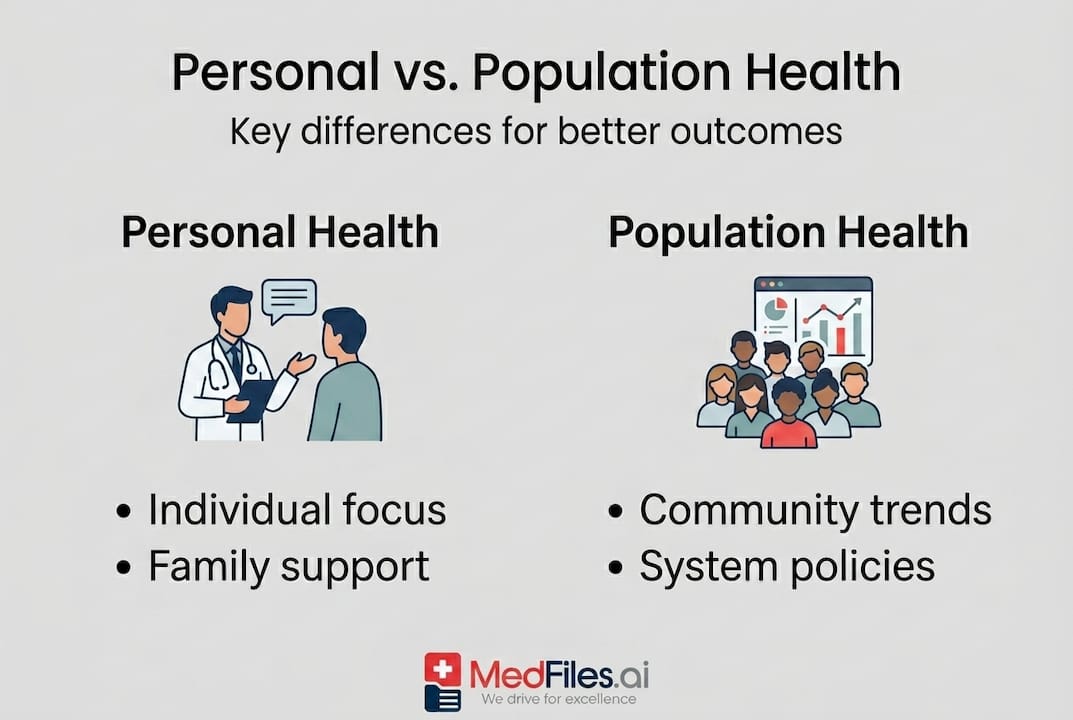
| Feature | Personal health management | Population health management |
|---|---|---|
| Focus | Individual and family | Communities and groups |
| Approach | Proactive, self-directed | Reactive, policy-driven |
| Primary tools | Records, wearables, self-care | Data analytics, clinical programs |
| Goal | Prevent illness, manage conditions | Reduce population-level risk |
| Who leads | You | Healthcare systems, governments |
Understanding this distinction matters because it clarifies what is within your power. You cannot change the healthcare system overnight. You can choose what to eat for dinner, whether to go for a walk, and whether your family’s records are organized and accessible.
The foundation: Personal health records (PHRs)
Every effective PHM strategy is built on one core tool: the personal health record (PHR). A PHR is a collection of your health information that you control, update, and share.
Key methodologies for PHRs include collecting, storing, and updating medical information such as lab results, doctor visit notes, allergies, immunizations, and medication lists. This information is then shared with healthcare providers to improve care coordination. When your new specialist already has your full history before the appointment starts, care improves dramatically.
Here is what a complete PHR should include:
- Lab results: Blood panels, urine tests, imaging reports, and pathology results
- Medication list: Current prescriptions, dosages, and any prior medications with outcomes
- Allergies: Drug, food, and environmental allergies with reaction details
- Immunization records: Vaccination dates and booster schedules for every family member
- Doctor visit notes: Diagnoses, treatment plans, and referrals from each appointment
- Surgical history: Procedures, dates, surgeons, and outcomes
- Family medical history: Hereditary conditions that affect risk assessment
- Mental health records: Therapy notes, diagnoses, and medication history where relevant
- Dental and vision records: Often overlooked but essential for a complete picture
Paper records feel familiar, but they are fragile. They get lost in moves, destroyed in floods, or simply left at home when you need them most. Digital storage solves these problems while creating new ones if you choose platforms without proper security protocols.
Best practices for PHRs include standardization, regular audits, HIPAA compliance (HIPAA stands for the Health Insurance Portability and Accountability Act, the US law governing health data privacy), and hybrid storage approaches that combine digital and paper backups where appropriate.
When it comes to organizing medical records, consistency is the biggest challenge most families face. Records arrive from multiple providers in different formats. Lab portals, paper printouts, emailed PDFs, and pharmacy receipts all need to land in one place.
The solution is a standardized workflow. Decide on a single system, whether that is a dedicated app, a secure document storage platform, or a well-organized digital folder structure. Commit every family member to uploading new documents within 48 hours of receiving them.
Pro Tip: Conduct a PHR audit every six months. Pull up every family member’s profile and check for gaps. Missing immunization records, outdated medication lists, and absent allergy entries are the most common problems. An audit takes 20 minutes and can prevent dangerous errors during emergencies. A digital records workflow makes this process significantly faster.
Essential self-care strategies for better health
Records create the foundation. Daily habits build the house. Here is where personal health management becomes something you live rather than something you store.
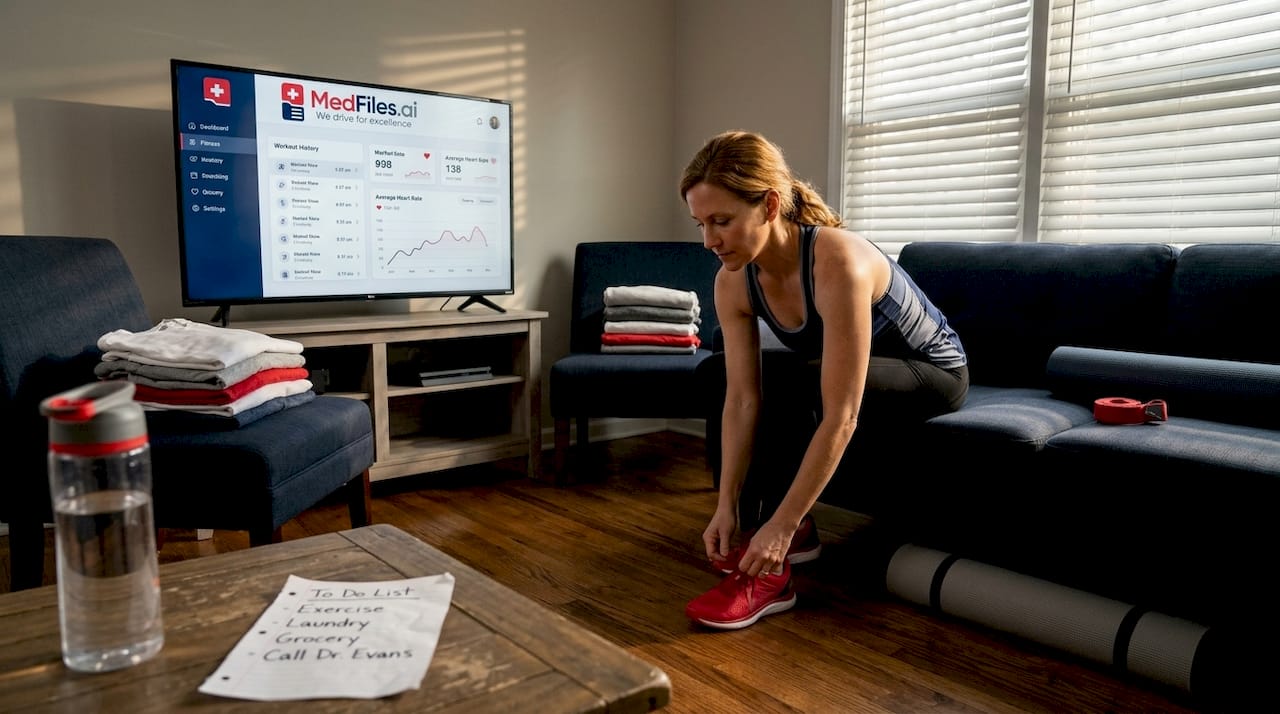
Five core healthy habits reduce heart disease and cancer risk significantly, reduce hospitalizations through self-management, and produce better outcomes when supported by family involvement. Those habits are: a healthy diet, regular exercise, not smoking, maintaining a healthy body weight, and prioritizing sleep.
Let’s make each one actionable:
-
Healthy diet. Prioritize vegetables, lean protein, whole grains, and healthy fats. Limit processed foods, added sugars, and excess sodium. You do not need a perfect diet, just a consistent one. A weekly meal plan removes the daily decision fatigue that leads to poor choices.
-
Regular exercise. Adults should aim for at least 150 minutes of moderate aerobic activity per week, roughly 3.5 hours. That breaks down to 30 minutes, five days a week. Strength training twice a week builds muscle mass and protects joints. The key is starting small and building a routine your family can follow together.
-
No smoking. Smoking remains the leading preventable cause of death in the US. If you smoke, quitting is the single highest-impact health decision you can make. Resources like the CDC’s quitline, medication support, and behavioral therapy all improve success rates.
-
Healthy body weight. BMI (Body Mass Index) is an imperfect but useful starting point. A BMI between 18.5 and 24.9 is generally considered healthy for most adults. Focus on sustainable habits rather than fast results. Crash diets fail. Gradual changes stick.
-
Sleep hygiene. Adults need seven to nine hours of quality sleep per night. Poor sleep is linked to higher rates of obesity, diabetes, cardiovascular disease, and mental health conditions. Consistent sleep and wake times, a dark and cool bedroom, and limiting screens before bed are evidence-based improvements.
-
Stress management. Chronic stress raises cortisol levels, disrupts sleep, impairs immune function, and increases inflammation. Practices like mindfulness, regular physical activity, adequate rest, and strong social connections all reduce stress effectively.
“Healthy diet, exercise, no smoking, healthy BMI, sleep hygiene, stress management, tracking metrics, and family involvement are the defining pillars of effective self-care.” — Harvard Self-Care Report
Tracking fitness progress is one of the most underrated strategies in PHM. When you can see your steps increasing, your resting heart rate dropping, and your sleep quality improving, you have concrete evidence that your habits are working. That feedback loop drives adherence.
Pro Tip: Involve every family member in at least one shared health routine. A Sunday walk, a weekly meal prep session, or a family fitness challenge builds accountability and makes healthy behavior the household norm rather than an individual effort. Harvard research confirms that family support measurably improves health outcomes.
Digital tools and technology: Enhancing personal health management
Technology does not replace good habits. It amplifies them. Used wisely, digital health tools make personal health management faster, more accurate, and easier to maintain over time.
Digital tools for PHM include wearables that monitor real-time metrics, apps and patient portals that manage records, and AI-powered systems including digital twins that provide early warnings about health trends. A digital twin is a virtual model of your health profile that uses your data to predict risks before symptoms appear.
Here is a breakdown of the key tools and what they actually do:
- Wearables (smartwatches, fitness trackers): Monitor heart rate, steps, sleep stages, blood oxygen, and in some models, ECG readings. The data is only useful if you review it regularly and share relevant findings with your doctor.
- Health apps: Track nutrition, medication schedules, menstrual cycles, blood pressure, glucose levels, and mental wellness. Many sync directly with wearables for a unified dashboard.
- Patient portals: Provided by hospitals and clinics, these portals give you access to your visit summaries, lab results, and prescription history. Download and save everything from these portals, they can be deactivated or change systems without warning.
- AI-powered record platforms: These platforms analyze uploaded documents, flag potential issues, and help organize information automatically. They are particularly useful for families managing multiple health profiles.
The digital health management benefits for families are significant, from faster emergency response to smoother specialist visits. But there are also real pitfalls to avoid.
Challenges with digital health tools include health anxiety triggered by constant monitoring, difficulty interpreting data without clinical training, inequitable access for low-income families, and privacy concerns when platforms lack proper security standards. It is worth understanding the benefits of digital records alongside these limitations.
Pro Tip: Use technology to supplement, not replace, human connection and professional guidance. If your wearable shows an irregular heart rhythm, do not spiral into worst-case scenarios online. Share the data with your doctor and let them interpret it in context. Technology gives you information. Clinicians give you understanding.
Addressing challenges and equity in personal health management
PHM is not equally accessible to everyone. That is an uncomfortable truth, but ignoring it means leaving the most vulnerable families behind.
Edge cases in PHM include individuals with low health literacy, cognitive limitations, irregular work schedules like shift work, elderly individuals managing complex medication regimens, and families in underserved communities with limited access to technology or consistent healthcare.
Key barriers to address:
- Low health literacy: Simplified language, visual guides, and trusted community health workers can bridge the gap. If medical documents confuse you, ask your doctor for a plain-language summary and store both versions.
- Cognitive and memory challenges: Automated reminders for medications, appointments, and record updates reduce the cognitive load. Digital platforms with family sharing features allow a trusted adult to help manage records for a family member who needs support.
- Shift work and irregular schedules: Health routines tied to fixed times of day break down for shift workers. Flexible meal timing, portable exercise habits, and sleep strategies designed for rotating schedules require specific planning.
- Access inequities: Not everyone has a smartphone, reliable internet, or the time to maintain detailed health records. Community health centers, public library resources, and low-cost digital health programs exist and can help close this gap.
“Equity and access are foundational to personal health management. Self-care must be balanced with professional integration to avoid placing undue burden on vulnerable individuals.” — WHO Self-Care Guidelines
Balancing self-care with professional medical care is critical. PHM does not mean managing everything alone. It means being an informed, prepared, and active participant in your own care. That partnership with your healthcare team works best when you arrive at appointments with organized records, clear questions, and a real understanding of your own data.
Our take: Why the real power of personal health management is family-driven, not just tech-enabled
Here is something the technology industry does not want to say out loud: the device is not the solution. The habit is.
We have seen families purchase the latest wearables, subscribe to every health app available, and still show up to the emergency room with no clear medical history, no list of current medications, and no idea whether a family member has a known allergy to the medication being administered. Technology was present. Organization was not.
The families that actually benefit from PHM share one common trait. They treat health records the same way they treat financial records: systematically, regularly, and as a shared family responsibility. Every adult in the household knows where the records are, how to access them, and who to share them with in a crisis.
That is not a technology problem. It is a culture problem. And culture starts with conversation, not apps.
The second overlooked element is emotional support. Chronic conditions, mental health challenges, and recovery from illness are not individual experiences. They affect everyone in the household. When families engage together in health management, tracking metrics, attending appointments, maintaining records, and supporting healthier habits, outcomes improve measurably. That is not a feel-good statement. It is documented in research.
We also believe that organizing medical records is one of the most concrete acts of care a family can perform. When you take the time to gather, digitize, and maintain complete records for every family member, you are not doing paperwork. You are building a safety net.
The families who have that net in place report one consistent feeling: peace of mind. Not because everything is perfect, but because they know they are prepared.
Next steps: Get organized and empowered with MedFiles.ai
You now have a clear picture of what personal health management looks like in practice. The next step is building the system that makes it sustainable.
MedFiles.ai is built for exactly this purpose. Whether you are a patient managing your own records or a provider looking for better coordination tools, MedFiles.ai offers a secure, organized, and instantly accessible solution. Explore patient solutions designed for individuals and families, or review doctor solutions that streamline clinical data exchange. Your entire digital medical history, stored securely, organized automatically, and accessible the moment you need it. Check out pricing options and find the plan that fits your family’s needs. Start today.
Frequently asked questions
What should I include in a personal health record?
Include medical history, lab results, doctor visit notes, allergies, immunizations, and ongoing conditions; regular updates and sharing with healthcare providers improve coordination and care quality significantly.
How often should I update my health records?
Update your records after every doctor visit, new test result, medication change, or annual checkup; consistent record updates are directly linked to better health outcomes and fewer clinical errors.
Are digital health tools safe and private?
Digital health tools are safe when you use platforms with HIPAA compliance, standardization, and audits built into their infrastructure, so always verify a platform’s security standards before uploading sensitive information.
What are the best self-care habits for preventing chronic disease?
Regular exercise, a healthy diet, quality sleep, stress management, and not smoking are the five habits proven to reduce heart disease and cancer risk most significantly.
How can families support each other in PHM?
Family involvement in exercise routines, nutrition choices, tracking health metrics, and sharing records improves adherence and outcomes measurably, making shared accountability one of the most effective PHM strategies available.