Patient-generated health records: Secure, empowered management
Learn what patient-generated health records are, how to collect and secure them, and how to share them with your care team for better health outcomes.
Patient-generated health records: Secure, empowered management
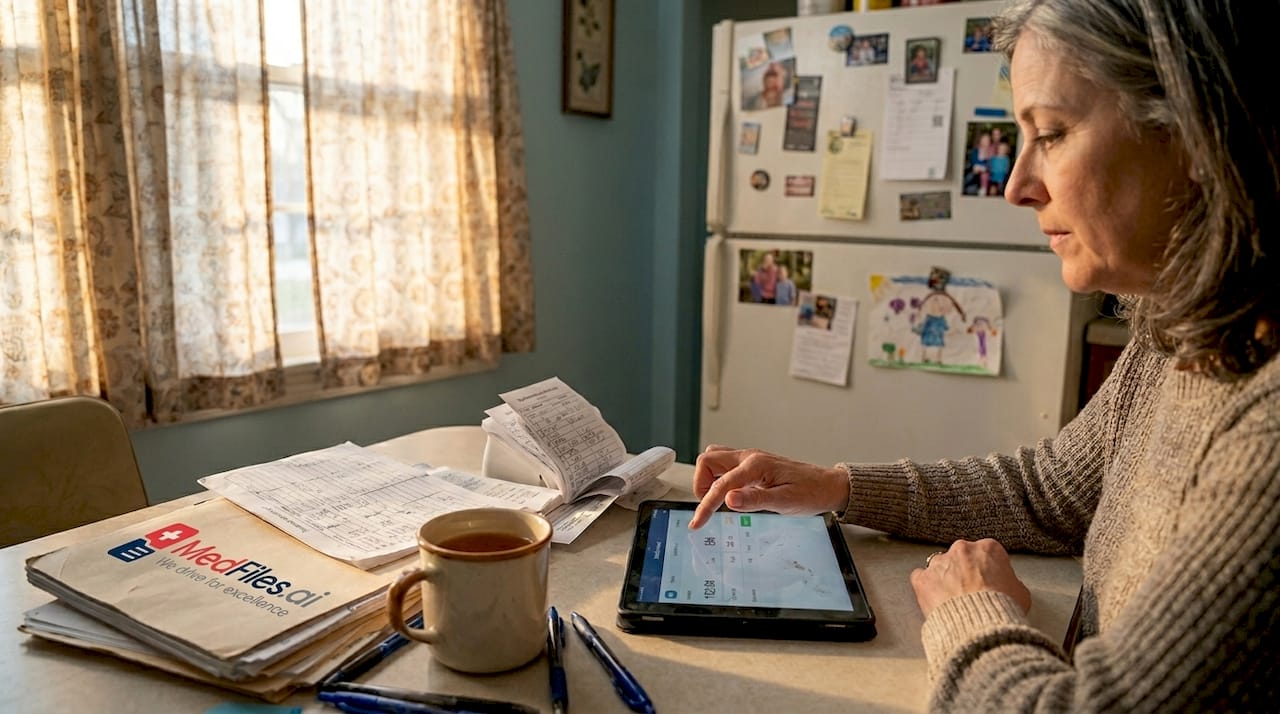
You’re sitting in your doctor’s office and they ask what your blood pressure has been running at home. You know it’s been high. But the numbers? Gone. The reading you took three weeks ago is on a sticky note somewhere. This is exactly the gap that patient-generated health data (PGHD) is designed to close. PGHD are health-related data created, recorded, or gathered by patients, families, or caregivers outside clinical settings. When organized well, this information gives both you and your care team a fuller, more accurate picture of your health between visits.
Table of Contents
- Understanding patient-generated health records: Types and real-world examples
- How PGHD is collected: Devices, apps, and workflow in daily life
- Sharing and securing PGHD: Best practices, privacy, and technology options
- The impact of PGHD: Benefits, challenges, and expert perspectives
- Why patient-generated records are the future—but only with smarter workflows
- How MedFiles.ai makes organizing and sharing PGHD easy and secure
- Frequently asked questions
Key Takeaways
| Point | Details |
|---|---|
| Everyday health data matters | Information you gather at home can significantly improve care decisions and coordination with your providers. |
| You control sharing | Patients and families decide how PGHD is shared and with whom, boosting privacy and confidence. |
| Choose secure digital tools | Look for platforms with strong privacy protections and easy sharing options to safeguard your health information. |
| Start simple, grow as needed | Begin tracking one or two key metrics and expand as your or your family’s health needs change. |
Understanding patient-generated health records: Types and real-world examples
Most people assume health records only come from clinics and hospitals. That’s not the full story. A significant portion of your health picture is generated at home, every single day.
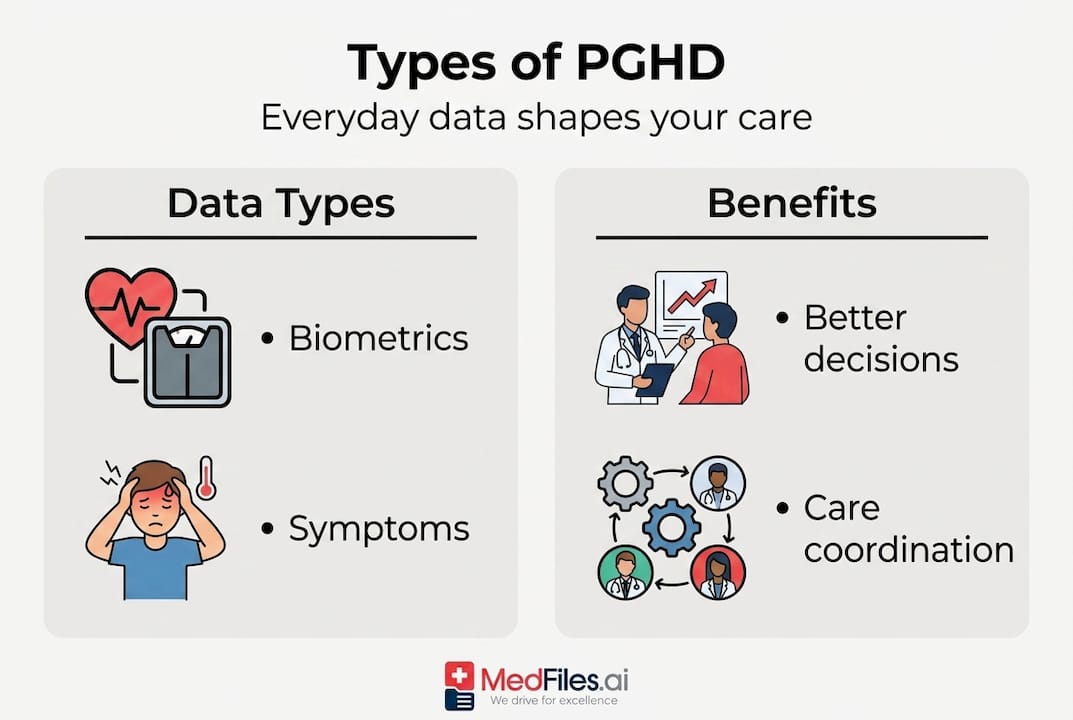
PGHD includes home blood glucose readings, diet and exercise logs, biometric data, and symptom tracking. All of it counts. The scope is wider than most families realize.
Here are some common, everyday examples:
- Home blood pressure readings taken with a cuff before breakfast
- Blood glucose logs kept by someone managing diabetes
- Step counts and sleep data from a fitness tracker
- Food diaries tracking what you ate and how you felt afterward
- Symptom journals noting headaches, fatigue, or pain levels
- Medication side effect notes jotted down after a new prescription
Not all PGHD is created the same way, though. Some data is solicited, meaning your doctor specifically asked you to track it. For example, a cardiologist might ask you to log your resting heart rate daily. Other data is unsolicited, meaning you chose to track it on your own. Both types have value.
Even simple handwritten notes about how you felt after starting a new medication are PGHD. You don’t need a smartwatch to contribute meaningful health data. When you share this information with your provider, it can open the door to personalized health programs tailored specifically to your patterns.
| Type of PGHD | Example | Typical use |
|---|---|---|
| Biometric readings | Blood pressure, glucose | Chronic disease management |
| Activity and fitness | Step counts, sleep tracking | Lifestyle and prevention |
| Nutrition logs | Food and water intake | Weight and metabolic health |
| Symptom diaries | Pain, mood, fatigue notes | Diagnosis support |
| Medication records | Dosing times, side effects | Medication safety |
Each type supports a different layer of your health story. Together, they help your provider see what a 15-minute office visit never could.
How PGHD is collected: Devices, apps, and workflow in daily life
Knowing what to track is one thing. Building a system that sticks is another. The good news is that the options range from very simple to highly automated.
Patients collect data using regulated medical devices, apps, wearables, or simple home logs, and decide when to share it. You are in control of the process from start to finish.

Here’s a quick comparison of your main options:
| Method | Best for | Key feature |
|---|---|---|
| Medical devices | Chronic condition tracking | Clinical-grade accuracy |
| Health apps | Daily logging and reminders | Convenient and portable |
| Wearables | Passive, always-on tracking | Automated data capture |
| Paper logs | Low-tech users or backup | No battery required |
Once you pick your method, the workflow is straightforward:
- Choose one metric to start with, like blood pressure or daily steps.
- Set a consistent time to record it, such as every morning before breakfast.
- Store readings in one place, whether a notebook or an app.
- Review trends weekly so you can spot patterns before your next appointment.
- Share the data with your provider, either by printing it out or using a secure sharing tool.
Families managing care for seniors will find value in monitoring senior health consistently. The advantages of tracking medical history grow significantly over time, especially for managing multiple conditions or medications.
If you’re managing records for more than one person, building a digital workflow for families makes sharing and organizing far less stressful. Platforms that let you organize medical records for families in one place reduce the risk of important data slipping through the cracks.
Pro Tip: Start by tracking just one metric for 30 days. Once that habit is solid, add a second. Trying to track everything at once is the fastest way to track nothing at all.
Sharing and securing PGHD: Best practices, privacy, and technology options
Collecting data is only useful if you can share it safely and keep it protected. This is where many families run into trouble, because not every app or platform takes privacy seriously.
Patients decide how PGHD is visible and shared, and secure aggregation through HIPAA-compliant platforms is increasingly available. That control belongs to you, and you should expect any platform you use to respect it.
When evaluating where to store and share your health data, look for these features:
- End-to-end encryption so that data is protected in transit and at rest
- HIPAA compliance as a minimum standard for any health platform
- Patient-controlled sharing, where you grant and revoke access
- FHIR compatibility to allow data exchange with clinical systems
- Audit logs so you can see who accessed your records and when
- Multi-factor authentication for account security
For a full breakdown of what to look for, secure medical document storage outlines the key standards and what they mean for your privacy.
Understanding HIPAA compliance in health tech is important. Compliance isn’t just a checkbox. It reflects how seriously a platform treats your sensitive information.
Your health data is yours. You choose what to share, with whom, and for how long. A trustworthy platform gives you full visibility and control, not just a privacy policy buried in fine print.
Pro Tip: Before signing up for any health app, search its name alongside “HIPAA” and “data breach” to check its track record. Five minutes of research can save you significant stress.
Exploring digital solutions for patients can help you identify platforms built with your privacy and convenience in mind. The benefits of storing medical records digitally go well beyond convenience, including stronger data security than most paper-based systems.
The impact of PGHD: Benefits, challenges, and expert perspectives
When it works well, PGHD transforms the patient-provider relationship. You arrive at appointments with data, not just memories. Your provider sees patterns, not snapshots.
The digital storage benefits extend into direct health outcomes. For example, higher tobacco cessation rates were observed in oncology clinics when patients provided PGHD, leading to more frequent treatment interventions. That’s a meaningful, real-world outcome driven by data patients themselves contributed.
Other major benefits include:
- A more complete health picture that goes beyond what clinical visits capture
- Better self-management of chronic conditions like diabetes, hypertension, or asthma
- Improved care coordination when multiple providers can access consistent information
- Greater patient empowerment, with individuals feeling more involved in their own care
- Faster response when symptoms change between appointments
But PGHD is not without its challenges. Digital health management is still evolving, and there are real hurdles to navigate:
- Data accuracy and validation: Home devices vary in quality; not all readings are clinically verified
- Integration gaps: Many EHR (electronic health record) systems don’t easily accept patient data yet
- Clinician workload: Reviewing large volumes of patient data takes time that providers don’t always have
- Privacy risks: Insecure apps can expose sensitive data
- Health literacy: Not all patients know how to interpret or communicate the data they collect
Good care coordination depends on bridging these gaps. Interoperability remains a work in progress across the healthcare industry, but patients who track and share their data consistently are already ahead of the curve.
Why patient-generated records are the future—but only with smarter workflows
Here’s an honest take: more gadgets are not the answer. Many families invest in expensive wearables, download a dozen health apps, and end up more overwhelmed than before. The data piles up with no system to make sense of it.
The real value of PGHD comes from sustainable habits and collaboration, not technology for its own sake. A simple blood pressure log reviewed weekly with your provider does more good than three months of unreviewed wearable data.
Experts emphasize prioritizing interoperability through FHIR standards, consent-driven workflows, and augmenting EHR records with patient notes for context, while balancing benefits with data validation to reduce risks. That’s not a call for more apps. It’s a call for better systems.
The families who benefit most from PGHD are those who start simple, build consistent routines, and use platforms that make sharing effortless. Exploring the digital records benefits available today shows just how practical this can be, even for non-technical users. The goal isn’t perfect data. It’s enough of the right data, shared at the right time.
How MedFiles.ai makes organizing and sharing PGHD easy and secure
If you’re ready to put effective PGHD management into practice, MedFiles.ai is built for exactly this purpose.
MedFiles.ai gives you a secure, centralized place to store all your health records, from home readings and test results to prescriptions and doctor notes. It uses HIPAA-ready infrastructure and end-to-end encryption so your data stays protected. Sharing with providers or family members takes seconds, not phone calls.
For families managing care for multiple people, multi-profile support keeps everything organized without creating chaos. Whether you’re managing a chronic condition or simply want your records ready at a moment’s notice, MedFiles.ai for patients makes it simple. Check out MedFiles.ai pricing to find the plan that fits your needs.
Frequently asked questions
What counts as patient-generated health data?
Any health information you or your family gather outside a clinic—like readings from home monitors, fitness tracker data, or daily symptom logs—is PGHD. It doesn’t need to be digital to count.
Is PGHD secure and private?
Security depends on the platform you choose. Look for HIPAA-compliant apps that let you control who sees your data and offer audit trails for added transparency.
How is PGHD used in my medical care?
Doctors use the data you provide to supplement clinical records, helping them coordinate care more effectively and make more personalized treatment decisions.
What are the main risks or challenges with PGHD?
Key concerns include data quality and validation, privacy risks from unsecured apps, and the challenge of integrating your records into clinical systems that may not be designed to receive them.
Can I manage PGHD for my whole family?
Yes. Secure sharing platforms allow you to organize and manage health data for multiple family members in one account, making it easier for caregivers to stay informed and prepared.
Recommended
- For Doctors | MedFiles.ai
- How to master digital medical records workflow for families | MedFiles.ai
- For Patients | MedFiles.ai
- Pricing & Plans | MedFiles.ai
- Personalized health programs: benefits, how they work, local options | Garden State Medical Group
- Streamline your preventive care workflow: better outcomes